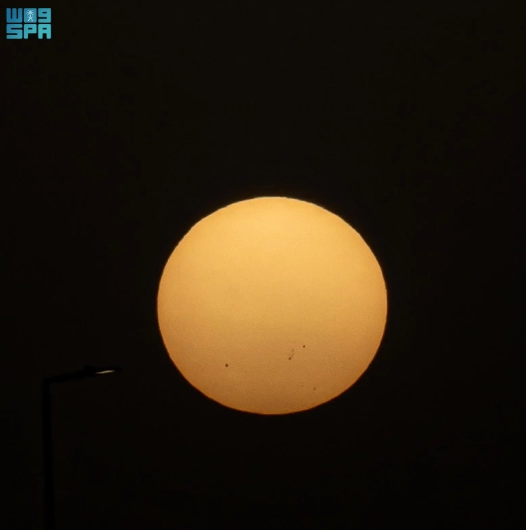
On the night of Sunday, a remarkable astronomical event occurred in the sky over Arar, Saudi Arabia, where seven clear sunspots were detected, signaling an increase in solar activity during this period. The appearance of this number of sunspots serves as evidence of the escalating activity within the solar cycle 25, which began in 2019.
Sunspots are formed due to intense disturbances in the sun's magnetic field, appearing darker and cooler compared to their surrounding areas. The increase in the number of these spots is directly linked to a higher likelihood of solar flares and coronal mass ejections, events that involve the explosion of magnetic plasma into space, leading to magnetic disturbances on Earth.
Details of the Event
Sunspots are natural phenomena that attract the interest of scientists and researchers in the field of astronomy, as they reflect changes in solar activity. As the number of sunspots increases, so does the probability of phenomena such as geomagnetic storms, which can impact the upper atmosphere of Earth. These storms can disrupt wireless communications, navigation systems, and satellites, raising concerns among scientists.
In recent days, a noticeable increase in solar activity has been recorded, prompting many astronomical observatories to intensify their monitoring of this phenomenon. While this activity is a natural part of the solar cycle, it must be approached with caution due to its potential effects on Earth.
Background & Context
Historically, Earth has experienced several solar cycles, with these cycles repeating approximately every 11 years. During these cycles, levels of solar activity fluctuate significantly, impacting the terrestrial environment. The current solar cycle 25 began in 2019 and has already witnessed considerable fluctuations in solar activity.
Sunspots have been studied for centuries, contributing to scientists' understanding of how the sun affects our planet. Understanding these phenomena aids in developing strategies to mitigate their negative impacts on modern technology.
Impact & Consequences
With the increase in solar activity, the risks associated with solar flares also rise, which can have severe consequences on technological systems. For instance, geomagnetic storms can disrupt electrical networks, leading to power outages in vast areas.
Moreover, these phenomena may affect the health of astronauts, as they are exposed to higher levels of radiation during periods of increased solar activity. Therefore, monitoring solar activity is vital for ensuring the safety of technological systems and the environment.
Regional Significance
For the Arab region, increased solar activity may impact communication and navigation systems, which heavily rely on satellites. In light of rapid technological advancements, it is essential for Arab countries to be prepared to face any negative effects that may arise from these phenomena.
Additionally, these phenomena open avenues for scientists and researchers in the region to study the effects of the sun on climate and the environment, potentially contributing to the development of strategies for adapting to climate changes.
In conclusion, monitoring solar activity and understanding its impacts is crucial for ensuring the safety of technological systems and protecting the environment. Arab countries should enhance cooperation in astronomical research to address future challenges.