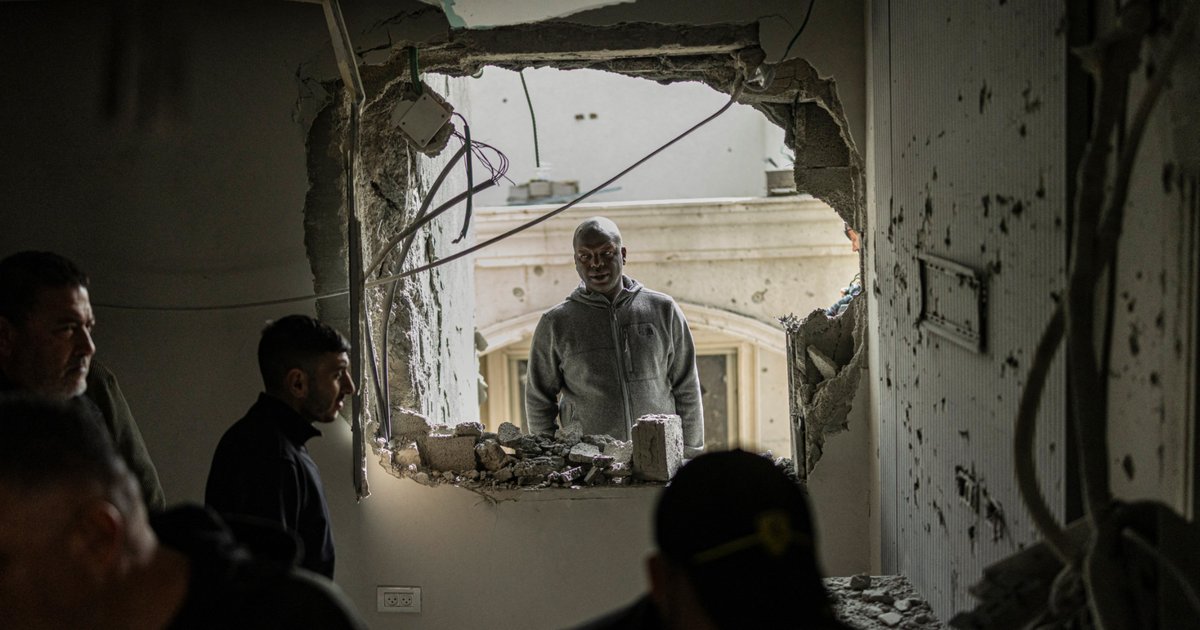
Adalah, the legal center for Arab minority rights in Israel, has issued a warning about the significant gaps in access to shelters between Palestinian and Jewish citizens in Israel. This warning comes at a time when the country is facing ongoing rocket threats due to escalating conflict with Iran and Lebanon.
In a letter addressed to the Israeli government, the organization emphasized that Palestinian citizens are disproportionately at risk due to a lack of basic infrastructure to protect them. This warning follows a government decision in March to allocate 81 million shekels (approximately 17 million pounds sterling) for the deployment of hundreds of mobile shelters across Israel, in an attempt to fill what the government described as "significant protection gaps."
Details of the Situation
Despite this decision, Adalah pointed out that the most needy areas, specifically the Israeli towns and villages with Palestinian populations, have historically been overlooked. According to data cited in the letter, only 37 out of 11,775 public shelters in Israel are located in Palestinian areas, representing just 0.3% of the total. A recent report by the state comptroller revealed that "the level of protection in public places in Arab areas is virtually nonexistent."
The gap is particularly evident in northern Israel, where approximately 56,000 people in Jewish communities have access to 128 public shelters, while similarly sized populations in neighboring Palestinian towns have access to only two shelters. Furthermore, a study conducted by civil society groups found that around 41% of Palestinian citizens in Israel have no access to any protected space at all, while half lack a reinforced room in their homes, and only 9% live in buildings that contain a shared shelter.
Background & Context
Statistics indicate that Palestinian citizens in Israel, who make up about 20% of the total population, bear approximately 60% of civilian fatalities resulting from rocket strikes in the war in northern Israel, and around 41% of all fatalities nationwide. The situation is even more severe for Bedouin communities in the Negev Desert, where about 165,000 people live in villages that the government considers "unrecognized," leaving them without access to shelters or basic infrastructure, fully exposing them to incoming fire.
In its letter, Adalah confirmed that most of this population remains vulnerable to rocket threats, noting that the number of mobile shelters deployed remains limited despite the scale of need.
Impact & Consequences
Adalah warned that current plans may exacerbate existing gaps. Reports indicate that hundreds of newly approved shelters may be placed in Israeli settlements in the occupied West Bank, which are considered illegal under international law, instead of in deprived Palestinian communities within Israel. The organization has urged the government to prioritize Arab towns in any allocation of protective measures and to develop a comprehensive plan to address the ongoing gaps.
It also highlighted legal obligations under both Israeli and international law to ensure equal protection of life. A previous ruling by the Israeli Supreme Court stated that "the state has a supreme obligation to protect the lives and safety of its citizens." Adalah emphasized that failure to take action could amount to discrimination, warning of "serious concern" that Palestinian citizens are being denied equal protection at a time when risks are increasing.
Regional Significance
This issue is part of the broader picture of the Israeli-Palestinian conflict, where tensions continue to impact the lives of millions of Palestinians both inside and outside the region. The inequality in access to basic protection reflects the ongoing challenges faced by Palestinians throughout the region, complicating efforts to achieve peace and stability.
In conclusion, the issue of shelter shortages for Palestinian citizens in Israel remains an urgent matter requiring both international and local attention. Addressing these gaps is not only a humanitarian issue but also a legal and moral necessity to ensure the protection of all citizens without discrimination.