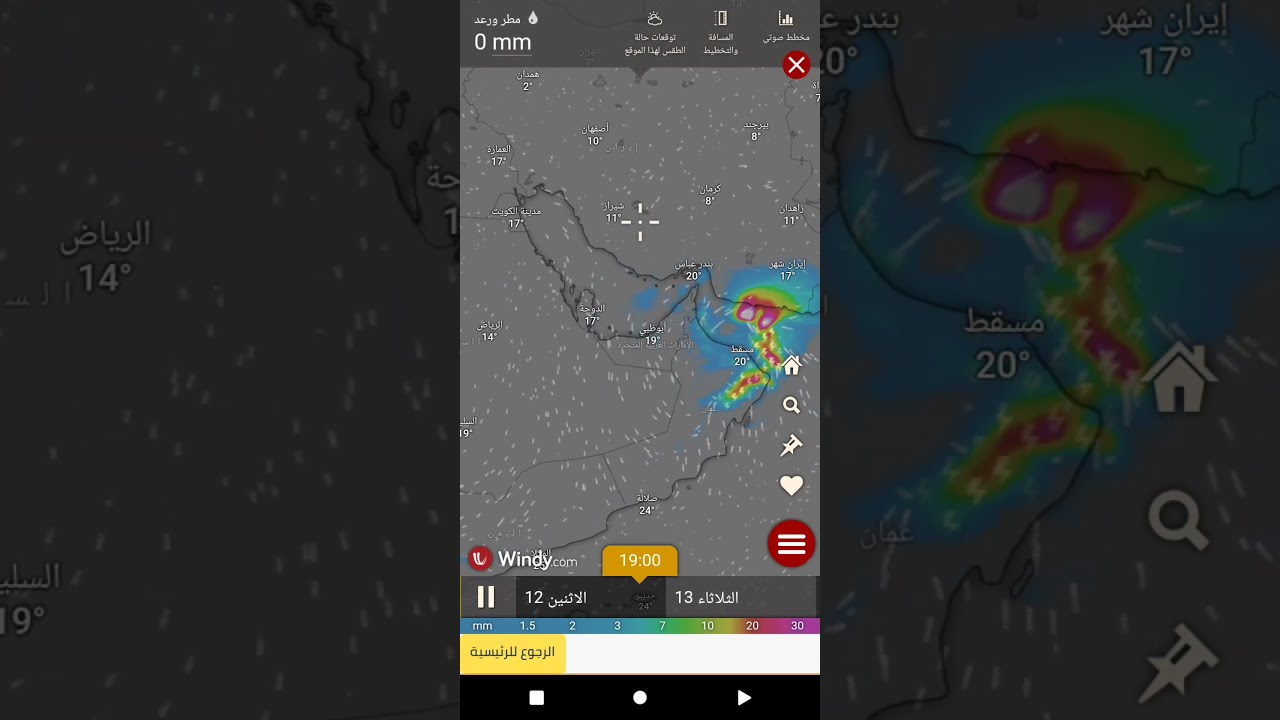
Today, Thursday, March 26, 2026, the Arabian Peninsula is experiencing a state of atmospheric instability, with meteorological data indicating an increase in the chances of cumulonimbus clouds and thunderstorms, which raises the likelihood of localized water accumulation and flash floods in some low-lying areas and valleys.
In Saudi Arabia, the National Center of Meteorology has issued alerts in several regions, including Riyadh and Makkah, where thunderstorms accompanied by active winds are expected, potentially leading to reduced visibility and flash floods in some moderate to heavy cases.
Details of the Weather Event
In Qatar, the Meteorological Department reported the presence of frontal disturbances during this spring period, with chances of rainfall, as forecasts indicate thunderstorms on Thursday evening in Doha. Meanwhile, in the United Arab Emirates, the National Center of Meteorology predicts partly to mostly cloudy weather, with cumulonimbus clouds and varying intensity of rain in scattered areas, and winds that could reach speeds of 60 kilometers per hour, which may lead to dust storms and reduced visibility.
In Oman, the Civil Aviation Authority indicates the flow of clouds over most governorates with a possibility of thunderstorms, reflecting a potential risk of flash floods in mountainous and low-lying areas. In Kuwait, there are chances of rain and thunderstorms, while data from Bahrain indicates cloudy weather with thunderstorms.
Background & Context
This weather condition comes in a broader scientific context, as research indicates that parts of the Arabian Peninsula have become more susceptible to intense and short-duration rainfall. The Intergovernmental Panel on Climate Change has confirmed that global warming increases the atmosphere's capacity to hold water vapor, raising the likelihood of intense rainfall events.
A study published in 2025 in the journal NPJ Climate and Atmospheric Science showed a significant increase in the frequency and intensity of extreme rainfall events across the Arabian Peninsula, indicating that these rains are not merely seasonal phenomena but extreme events that can lead to flash floods and significant losses.
Impact & Consequences
Studies indicate that annual rainfall could increase in most Emirates by up to 30% in certain future scenarios, reflecting an important regional dimension. Parts of eastern Arabia have seen an increase in winter rainfall by about 25% to 30% over the past decades, reflecting a rising susceptibility to flash floods.
The most prominent evidence of this trend is the flooding experienced in the UAE and Oman in April 2024, where heavy rains caused significant disruptions to infrastructure. Several studies have confirmed that these rains have become an increasing threat with rising climate temperatures, making them more intense.
Regional Significance
Forecasts indicate that the Arabian Peninsula may remain dry on average, but it will be subjected to more intense rainfall bursts over short periods, increasing the risk of sudden floods. This situation necessitates that authorities take precautionary measures to ensure the safety of citizens and property.
Repeated warnings from researchers indicate that the danger lies not only in the annual amount of rainfall but in the concentration of rain over a few hours on terrains and cities that cannot bear this water load, necessitating new strategies to deal with these increasing climatic phenomena.