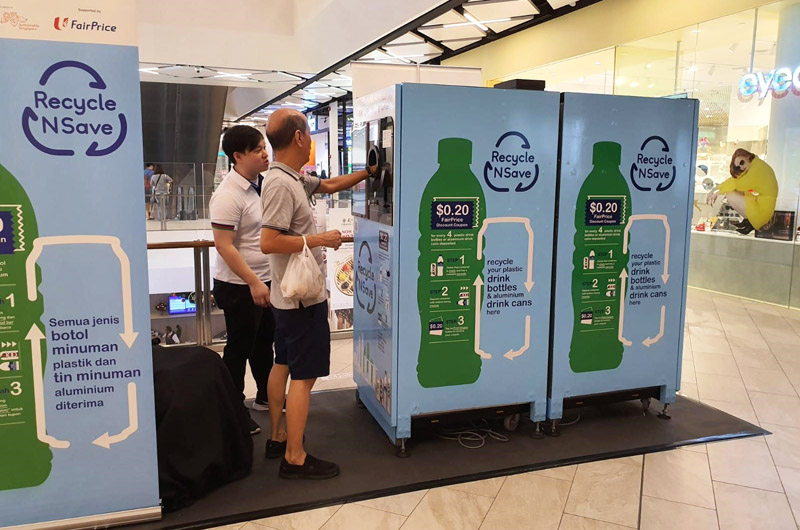
Singapore has launched a new system today (April 1st) for the return of empty beverage bottles, where consumers can reclaim a deposit of 10 Singapore cents (approximately 0.08 USD) upon returning eligible bottles through designated bottle return machines.
This system is managed by BCRS Ltd, a non-profit organization licensed by the National Environment Agency (NEA) of Singapore, consisting of a coalition of beverage producers such as Coca-Cola Singapore Beverages, F&N Foods, and Pokka.
Details of the New System
Eligible bottles include those made from plastic or metal, with capacities ranging from 150 ml to 3000 ml. These bottles must carry the deposit label and will be accepted starting today. Consumers can return bottles via the bottle return machines located throughout Singapore, and the bottles must be empty and uncrushed, containing scannable barcodes.
Stephanie Yip, CEO of BCRS Ltd, encouraged consumers to wash the bottles before returning them, noting that cleanliness facilitates the collection and sorting process.
Background & Context
This system was first proposed in 2019 by a citizen working group focused on recycling, aimed at increasing household recycling rates and reducing contamination in recycling bins. The initiative is expected to cover over one billion beverage bottles used annually, with a goal of recovering more than 16,000 tons of materials each year.
Waste generated from packaging is a significant issue in Singapore, accounting for one-third of household waste. This system aims to encourage citizens to be more mindful of the containers they consume.
Impact & Consequences
The beverage bottle refund system is considered an important step towards enhancing recycling in Singapore, with expectations to recover 60% of bottles in the first year. It is also part of an extended producer responsibility framework, requiring producers to take responsibility for the bottles they place on the market.
Lionel Durai, Executive Director of Zero Waste SG, pointed out the need for further education on recycling initiatives like BCRS, emphasizing that efforts should focus on rebuilding trust in recycling and teaching people how to recycle correctly.
Regional Significance
Singapore's experience in waste management and recycling serves as a model for the Arab region, where many countries face similar challenges in waste management. This initiative may inspire Arab nations to develop similar systems aimed at improving recycling rates and reducing waste.
In conclusion, the beverage bottle refund system in Singapore represents a significant step towards achieving environmental sustainability goals, reflecting the government's and community's commitment to improving the environment.