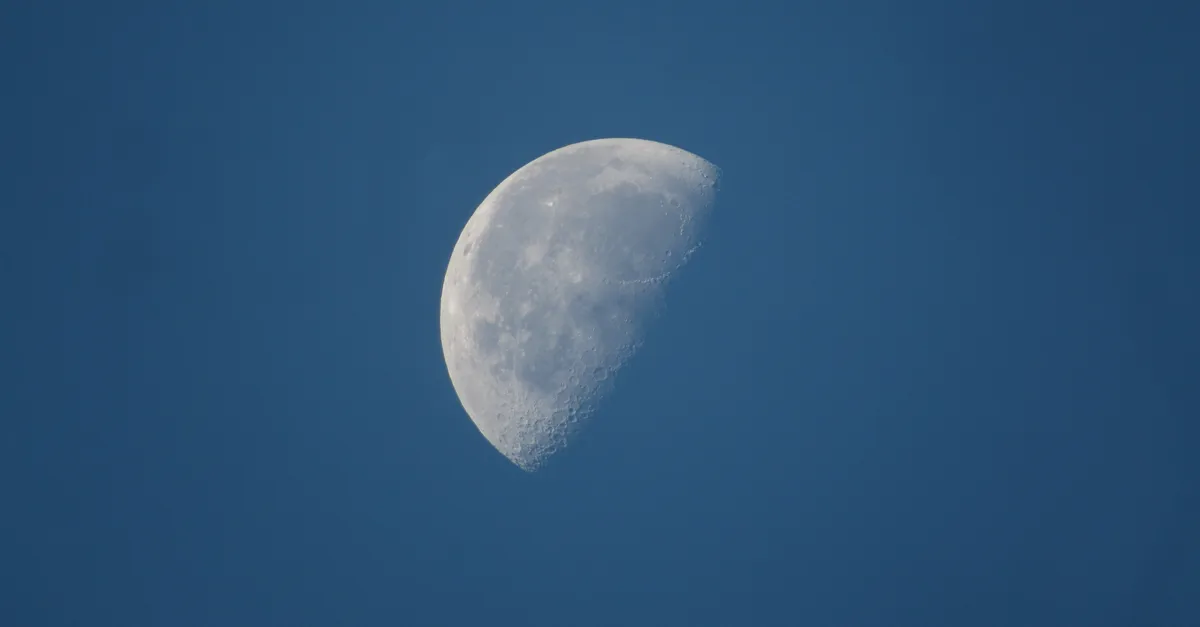
Next Sunday, a rare celestial event known as the 'Small Blue Moon' will occur, where the full moon appears at its farthest point from Earth, making it look smaller than usual. This astronomical phenomenon captures the interest of many worldwide, as it presents a unique chance to see the moon in a different light.
The Small Blue Moon, or 'Micromoon,' occurs when the moon is in its full phase and reaches its farthest point from Earth in its elliptical orbit. This astronomical event is considered unique, as it happens only once every few years, making it a highly anticipated occasion for astronomy enthusiasts and photographers alike.
Details of the Event
The Small Blue Moon is expected to occur on Sunday, appearing at precisely 10:30 PM GMT. At this moment, the moon will be at its maximum distance from Earth, making it appear up to 14% smaller compared to when it is at its closest point, known as the 'Supermoon.'
This phenomenon is not only visually intriguing but also carries significant scientific implications. Studies of such events can enhance our understanding of celestial movements and their effects on Earth.
Background & Context
Historically, the Small Blue Moon phenomenon has been regarded as a sign of luck or significant events in various cultures. In some traditions, seeing a blue moon is believed to bring good fortune, while in others, it signifies change. These astronomical phenomena have always intrigued scientists and astronomers, contributing to the enhancement of knowledge about the universe.
In recent years, the popularity of these celestial events has surged, thanks to social media, where people share their photos and experiences with others. This interaction raises public awareness of astronomy and encourages more individuals to explore the skies.
Impact & Consequences
These astronomical phenomena provide an opportunity to educate the public about the importance of astronomy and its role in understanding the universe. They also stimulate interest in the natural sciences and foster scientific curiosity among younger generations. By highlighting these events, communities can enhance their focus on scientific research and technology.
Furthermore, these phenomena can impact astronomical tourism, as many seek to travel to specific locations to witness these events more clearly. This can boost the local economy in those areas and increase awareness of the importance of environmental conservation.
Regional Significance
In the Arab region, these phenomena represent an opportunity to enhance astronomical culture. Many Arab countries have a rich heritage in astronomy, and these events can serve as a means to revive this heritage. By organizing astronomical events and festivals, Arab nations can encourage interest in astronomy and promote scientific tourism.
Additionally, these phenomena can be utilized as a platform for collaboration among Arab countries in scientific research, enhancing the exchange of knowledge and expertise in this field.
In conclusion, the Small Blue Moon is an exciting astronomical event worth witnessing. It is not merely a visual phenomenon but carries important scientific and cultural implications. Therefore, everyone is encouraged to follow this astronomical event and enjoy the beauty of the sky.