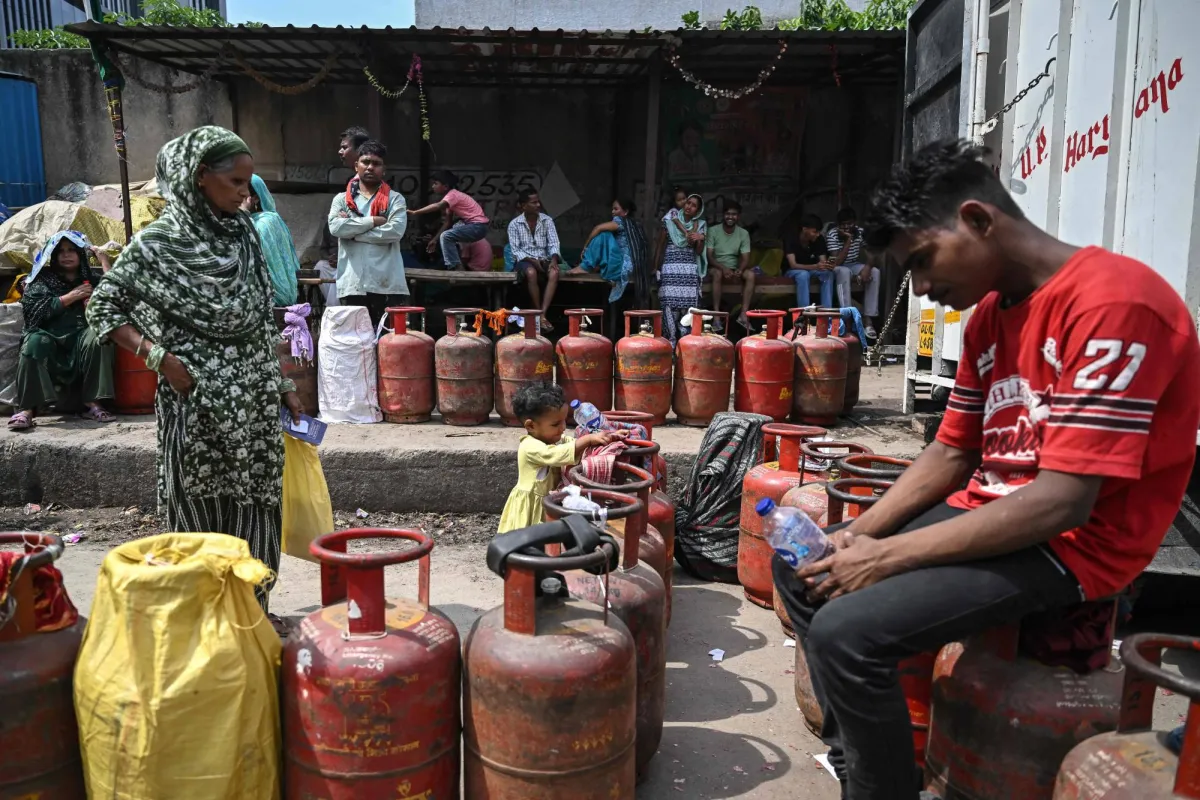
Events are rapidly unfolding in South Asia, where countries housing one-fifth of the global population are grappling with a crippling energy crisis stemming from the U.S.-Israeli war on Iran. This conflict has led to a sharp decline in supplies and unprecedented price hikes, prompting governments to take urgent action to mitigate the crisis.
In India, the government has taken drastic steps to alleviate the impact of the crisis, reducing customs duties on gasoline and diesel while imposing additional taxes on jet fuel and diesel exports. Emergency measures have been activated to redirect gas supplies from non-essential sectors to key consumers, with oil refineries instructed to ramp up production of liquefied petroleum gas.
Details of the Situation
In Pakistan, fuel allocations for government departments have been cut by 50% for two months, and the workweek has been reduced to four days in government offices, with 50% of employees required to attend. Additionally, matches of the Pakistan Super League have been moved behind closed doors as part of austerity measures.
Meanwhile, in Bangladesh, working hours for offices and banks have been reduced to seven hours, and shopping centers are required to close by 7 PM. Offices have been asked to lower energy consumption, including a ban on decorative lighting during events.
In Nepal, the weekend has been extended to two days, with the government making legal arrangements to convert gasoline and diesel vehicles to electric. Gasoline and diesel prices have been raised, and a rationing system for cooking gas has been implemented.
Sri Lanka has announced an official holiday to conserve fuel, reducing train and bus services, while the Maldives is seeking fuel supplies from India amidst rising fuel prices to maintain availability.
Background & Context
These measures come amid escalating tensions in the Middle East, where the war is impacting global energy prices. Indonesian Economy Minister Airlangga Hartarto announced that airlines would be allowed to raise ticket prices due to increased fuel charges, while tax exemptions have been granted to certain companies.
The Indonesian Transport Minister confirmed that airlines had requested fuel surcharge increases of up to 50%, but the government deemed a 38% increase to be a compromise. Simultaneously, the government is working to enhance energy supply security by directing oil and gas production towards the domestic market.
Impact & Consequences
Governments in the region expect these measures to significantly affect the local economy, as they aim to reduce reliance on imports and direct production to meet local market needs. These actions may also help stabilize prices in the short term, despite ongoing challenges.
Countries are striving to balance meeting citizens' needs while ensuring supply sustainability, reflecting the importance of regional cooperation in addressing crises.
Regional Significance
The energy crisis in South Asia serves as a model for Arab countries facing similar challenges. It is crucial for Arab nations to adopt effective strategies to handle emergency crises, especially given their heavy reliance on imported energy.
In conclusion, the energy crisis in South Asia is a vital lesson on the importance of strategic planning and rapid crisis response, urging Arab nations to take proactive steps to ensure energy sustainability.