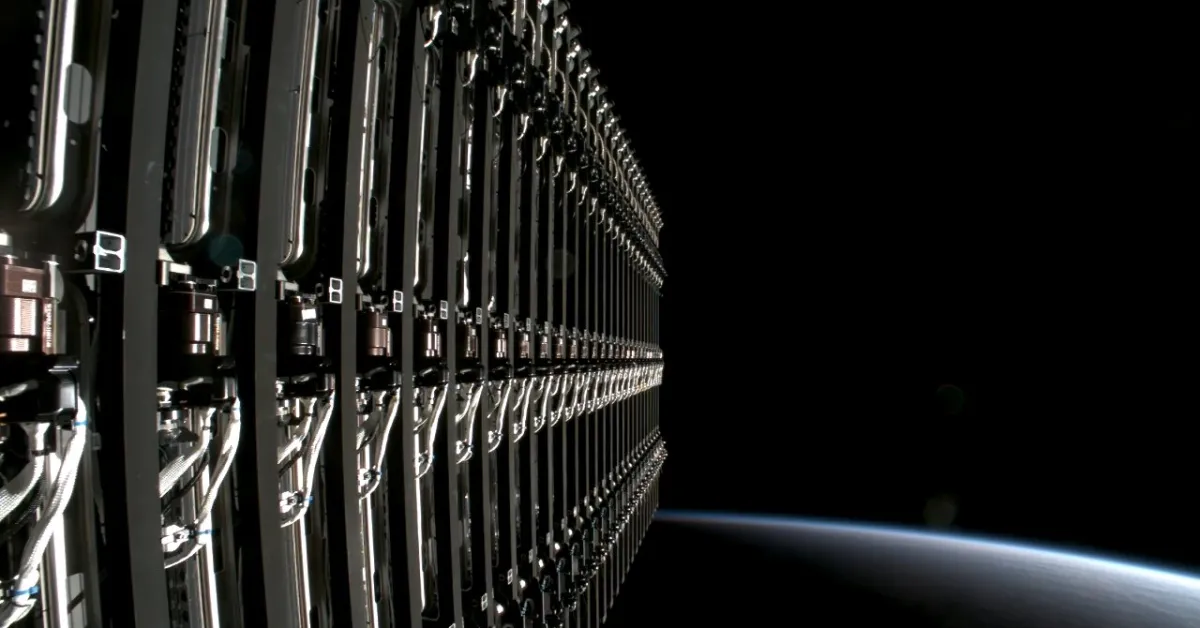
SpaceX, the American aerospace manufacturer, has reported the loss of contact with one of its Starlink satellites after it experienced what the company termed an 'anomalous event.' The incident took place at an altitude of 560 kilometers above the Earth's surface, an increasingly crowded area known as low Earth orbit, where over 24,000 objects are tracked, including debris and Starlink satellites.
In a statement released on platform X, SpaceX confirmed that it had not disclosed specific details regarding the incident, but the space tracking company Leo Labs reported that it detected 'dozens of objects' in the vicinity of the Starlink satellite 34343 following the explosion. SpaceX clarified that recent analyses indicate this event poses no new threat to the International Space Station or its crew, nor will it affect the launch of NASA's Artemis 2 mission.
Details of the Incident
SpaceX is in communication with NASA and the U.S. Space Force to monitor the satellite and the trackable debris. It is expected that remaining parts of the satellite will burn up in the atmosphere over the coming weeks. This incident is not the first of its kind; SpaceX experienced a similar occurrence last December when it lost contact with another satellite that appeared to have exploded, just a week after a close call with a Chinese satellite.
These incidents are part of the challenges faced by companies operating in the space sector, especially given the significant increase in the number of satellites being launched, which raises the risk of collisions in space.
Background & Context
Founded in 2002 by Elon Musk, SpaceX aims to reduce the cost of space travel and facilitate access to outer space. The Starlink project is part of SpaceX's vision to provide high-speed internet worldwide, particularly in remote areas. The company has received approval from the Federal Communications Commission to launch up to one million satellites under this initiative.
Satellites are a crucial component of modern digital infrastructure, playing a vital role in providing internet and communication services. However, the increase in the number of satellites raises concerns about space debris and its impact on the space environment.
Impact & Consequences
Incidents like the explosion of the Starlink satellite raise questions about the safety of satellites and their effects on space. With the continuous increase in the number of satellites, companies and governments must work together to develop effective strategies for managing space debris and reducing associated risks.
Furthermore, these incidents could affect the plans of major companies in the space sector, as SpaceX aims to achieve new milestones in space exploration, including launching crewed missions to the Moon and Mars. Any delays or technical issues could impact the timeline of these ambitious projects.
Regional Significance
Given the growing interest in space in the Arab world, these incidents may serve as a warning to Arab nations seeking to develop their own space programs. Significant investments in technology and infrastructure are required to ensure the safety of satellites and prevent accidents.
Moreover, cooperation among Arab countries in the field of space may be essential for knowledge and experience sharing, contributing to enhancing space capabilities in the region.