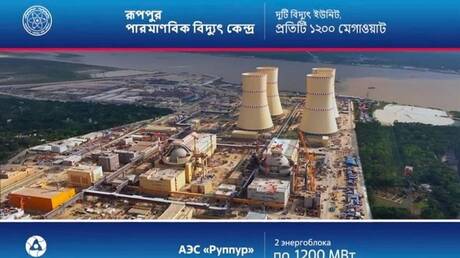
The Russian state corporation 'Rosatom' has initiated the process of loading nuclear fuel into Unit 1 of the 'Rooppur' nuclear power plant in Bangladesh. This event represents a crucial phase in the commissioning of the first reactor, reflecting the progress made in the nuclear energy project, which is the first of its kind in the country.
This step follows years of planning and collaboration between the Bangladeshi government and 'Rosatom', with a cooperation agreement signed in 2011. The plant aims to enhance Bangladesh's capacity to generate electricity and meet its growing energy needs.
Details of the Event
The 'Rooppur' nuclear power plant consists of a single reactor with a capacity of up to 1200 megawatts, and it is expected to provide energy for approximately 15 million people. The plant has been designed according to the highest nuclear safety standards, reflecting 'Rosatom's commitment to delivering safe and efficient technology.
The nuclear fuel loading process is being conducted under the supervision of Russian and Bangladeshi experts, emphasizing the importance of this step in achieving the country's ambitious energy goals. This project is part of Bangladesh's strategy to diversify its energy sources and reduce reliance on fossil fuels.
Background & Context
Bangladesh is striving to enhance its energy infrastructure amid increasing electricity demand. The 'Rooppur' nuclear project is part of the government's plan to generate 40% of its energy needs from non-traditional sources by 2041. This direction reflects the government's commitment to developing sustainable energy and achieving economic development.
Despite the challenges faced by the project, including financial and administrative delays, the partnership with 'Rosatom' has helped overcome many obstacles. This collaboration serves as a model for nuclear energy initiatives in developing countries.
Impact & Consequences
The 'Rooppur' nuclear power plant is expected to have a significant impact on the Bangladeshi economy, as it will create new job opportunities and contribute to improving living standards. Additionally, the plant will help reduce power outages that negatively affect economic activities.
Furthermore, this step could enhance Bangladesh's position as a leading country in nuclear energy within the region, potentially attracting foreign investments and strengthening regional cooperation in energy sectors.
Regional Significance
This project represents an opportunity for Arab countries seeking to develop their nuclear programs. Arab nations could benefit from Bangladesh's experiences in building safe and efficient nuclear power plants, thereby enhancing their sustainable energy strategies.
This development also highlights the importance of international cooperation in the energy sector, where Arab countries can leverage Russian expertise in this field, thereby strengthening their capacity to achieve their energy goals.
In conclusion, the commencement of nuclear fuel loading at the 'Rooppur' plant is a historic step for Bangladesh, enhancing its ability to meet its energy needs. This project reflects international cooperation in the field of nuclear energy, which boosts opportunities for economic and social development in the country.