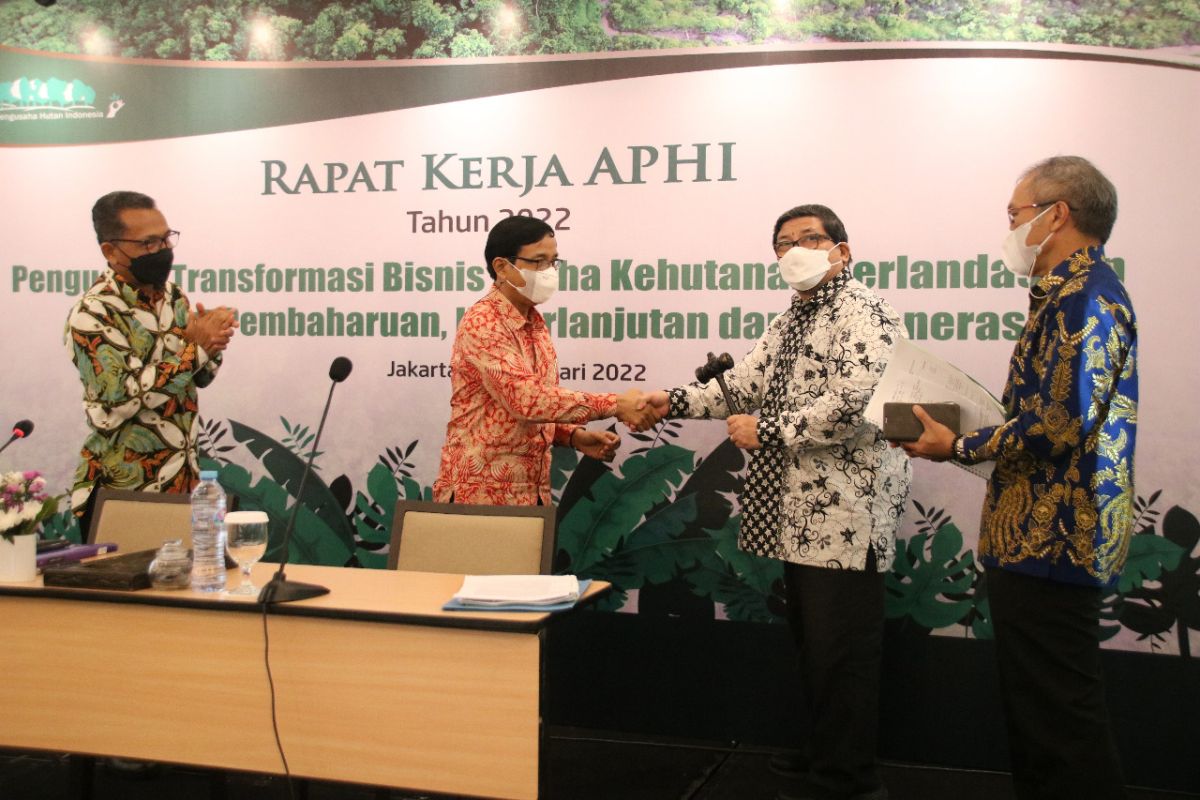
The Indonesian Association of Forest Entrepreneurs (APHI) emphasized the importance of companies' commitment to forest protection, stressing the sector's role in supporting sustainable development. This statement was made during a celebration in Jakarta for Eid al-Fitr, where the association's president, Suwarso, pointed out the growing global challenges such as climate change and forest degradation.
In his speech, Suwarso asserted that these challenges require companies to adopt sustainable forest management practices that balance economic, social, and environmental dimensions. He explained that the association is working to expand forest coverage through activities such as agriculture and reforestation, ensuring the wise use of forest resources.
Event Details
During the celebration, Suwarso highlighted the importance of enhancing cooperation between the private sector and the government, noting the need for innovation in forest management. He also called for improved governance and enhanced social and environmental responsibility within this vital sector.
For his part, the Secretary General of the Ministry of Forestry, Mahfud M.B., confirmed that the government is working to enhance forest management by improving coordination between the central and provincial levels. He mentioned plans to develop ecosystem management centers as part of urban planning strategies.
Background & Context
Indonesia is considered one of the largest forested countries in the world, boasting immense biodiversity. However, the country faces significant challenges due to deforestation and climate change. Historically, forests have been a primary source of economic resources, but their degradation now threatens the environment and local communities.
The Indonesian government aims to achieve a balance between economic development and environmental protection, which requires joint efforts from all stakeholders involved. Research has shown that sustainable forest management can contribute to improving the quality of life for local communities.
Impact & Consequences
These initiatives are essential for addressing current environmental crises. Raising awareness of the importance of forests and their role in environmental conservation can lead to positive changes in local and international policies. Additionally, enhancing cooperation between the public and private sectors can contribute to achieving sustainable development goals.
Moreover, improving forest management can help reduce carbon emissions, which contributes to combating climate change. This, in turn, can open new avenues for investment in sustainable development projects.
Regional Significance
Arab countries also face similar environmental challenges, such as desertification and land degradation. The Indonesian experiences in forest management can serve as an inspiration for Arab nations to adopt sustainable strategies. Cooperation between countries can facilitate knowledge and experience exchange, enhancing regional efforts to tackle environmental challenges.
In conclusion, the commitment to forest protection represents a significant step towards achieving sustainable development. All stakeholders must work together to ensure the sustainability of natural resources for future generations.