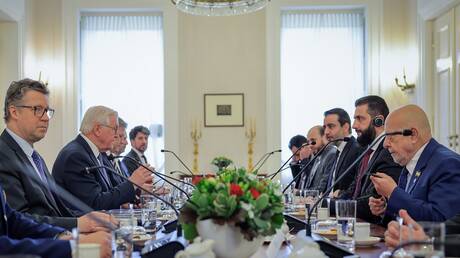
Syrian President Ahmad al-Shara held a meeting today, Monday, with German President Frank-Walter Steinmeier in the German capital, Berlin, where they discussed the bilateral relations between Syria and Germany and ways to enhance them in various fields. This meeting is part of the efforts of both countries to develop joint cooperation in the areas of politics, economy, and culture.
This visit is considered an important step in the context of changing international relations, as Syria seeks to rebuild its relationships with European countries after years of internal conflict and international isolation. For its part, Germany aims to strengthen its role as a mediator in the region, reflecting its interest in the humanitarian and political situations in Syria.
Details of the Meeting
During the meeting, a range of important issues were reviewed, including economic cooperation and trade exchange, as well as human rights issues and humanitarian aid. President al-Shara expressed his appreciation for the German support in the fields of relief and reconstruction, emphasizing the importance of enhancing the partnership between the two countries.
The possibility of enhancing cooperation in the fields of education and scientific research was also discussed, with President Steinmeier highlighting the importance of academic and cultural exchange between the two countries. Both sides affirmed the necessity of joint work to address regional and international challenges, including migration and security issues.
Background & Context
Historically, Syrian-German relations have experienced numerous fluctuations, as Germany was one of the countries that criticized the Syrian regime for human rights violations. However, the current situation in Syria requires a reassessment of these relations, especially with the increasing need for humanitarian aid and reconstruction after years of conflict.
In recent years, some European countries have begun to reopen channels of communication with the Syrian government, reflecting a shift in foreign policy towards Damascus. This trend may contribute to improving humanitarian conditions in the country, but it also requires a commitment from the Syrian government to improve its human rights record.
Impact & Consequences
This visit could lead to enhanced cooperation between Syria and Germany, opening new avenues for economic and political collaboration. Additionally, improving relations with European countries may help alleviate economic pressures on Syria and enhance opportunities for international aid.
However, these steps may face significant challenges, including political instability in the region and varying positions among European countries regarding the Syrian regime. Therefore, the success of these relations depends on both parties' ability to overcome these obstacles and achieve tangible results.
Regional Significance
These developments in Syrian-German relations reflect a change in political dynamics in the region, as Arab countries seek to rebuild their relationships with global powers. These steps may lead to enhanced stability in the region, but they may also provoke reactions from other countries that view improved relations with the Syrian regime as a threat to their interests.
Ultimately, the question remains about Syria's ability to benefit from these new opportunities and the international community's willingness to support reconstruction efforts and improve humanitarian conditions in the country. The success of these relations could open doors for further cooperation with other countries, benefiting the Syrian people and enhancing regional stability.