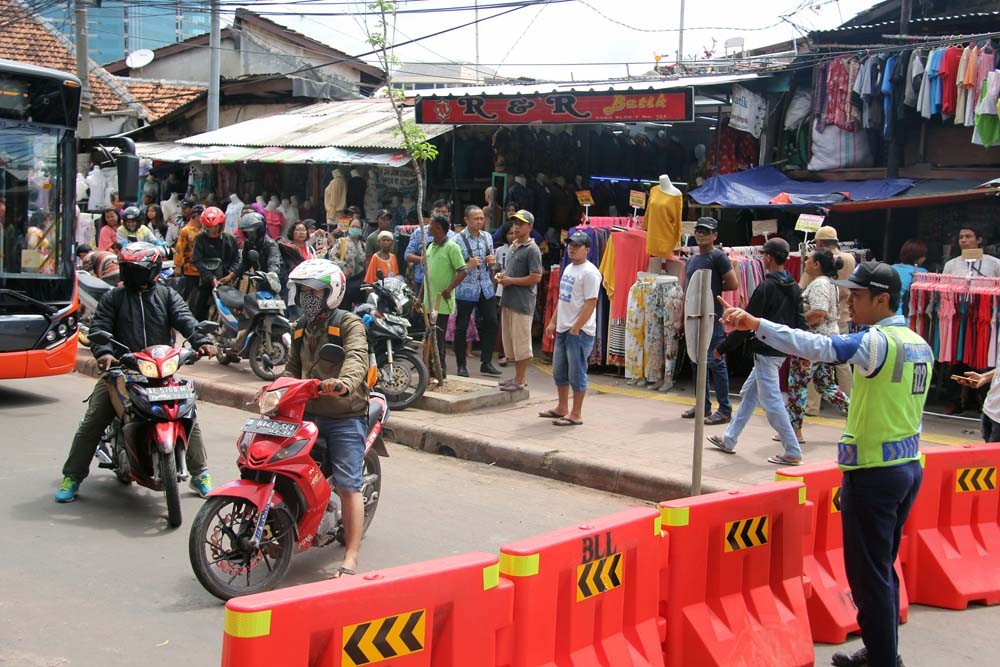
In a move aimed at enhancing public order and improving the city's aesthetics, the local police unit (Satpol PP) in West Jakarta has implemented a new campaign to regulate illegal parking and unlicensed vendors in the Glodok area, which took place last Thursday.
During the campaign, authorities took strict measures that included the removal of vehicles parked illegally on sidewalks, with a process called "valve pulling" applied to more than 60 motorcycles. Edison Butar Butar, head of the security and order department at Satpol PP, confirmed that these measures are in accordance with local law number 8 of 2007, which regulates public order, especially regarding the use of sidewalks.
Details of the Campaign
Butar Butar stated, "We are working to enforce laws that ensure public facilities, including sidewalks, remain clean and safe for pedestrians. Our goal is to create a comfortable environment for citizens, which is why we implemented this campaign today." Additionally, seven street vendors were removed from the area, as authorities seek to restore the primary function of sidewalks as pedestrian spaces.
Butar noted that this campaign is not the first of its kind, as regular monitoring has been conducted in the area over the past two months. He explained, "Thank God, we have seen a decrease in the number of illegal parking incidents during this period, indicating that our efforts are starting to bear fruit."
Background & Context
The Glodok area is considered one of the vibrant regions in Jakarta, known for its cultural and commercial diversity. However, the increasing number of vehicles and street vendors has led to traffic chaos and congestion on the streets, prompting authorities to take strict measures to maintain order. These actions are part of the Indonesian government's efforts to improve the quality of life in major cities, aiming to achieve a balance between economic development and public order.
Historically, Jakarta has witnessed many similar campaigns, but challenges remain, especially in densely populated areas. These campaigns require ongoing cooperation from the local community to ensure their success.
Impact & Consequences
This campaign is seen as a positive step towards improving public order in Jakarta, contributing to enhanced public safety and providing a more comfortable environment for pedestrians. However, it raises questions about how to address the street vendors who rely on their trade as their primary source of income. The government must find alternative solutions for these vendors to ensure they are not adversely affected by these measures.
Moreover, improving public order in urban areas can contribute to boosting tourism and attracting investments, benefiting the local economy. Maintaining the city's aesthetics and cleanliness is crucial for attracting visitors and investors.
Regional Significance
Jakarta's experience in organizing public spaces can serve as an inspiration for Arab cities facing similar challenges, such as traffic chaos and street congestion. Implementing effective strategies for organizing public facilities can enhance the quality of life in these cities and improve the experience for both citizens and visitors.
In conclusion, there is an urgent need for cooperation between the community and local authorities to ensure the success of these campaigns and achieve the desired goals of improving public order and maintaining the aesthetics of cities.