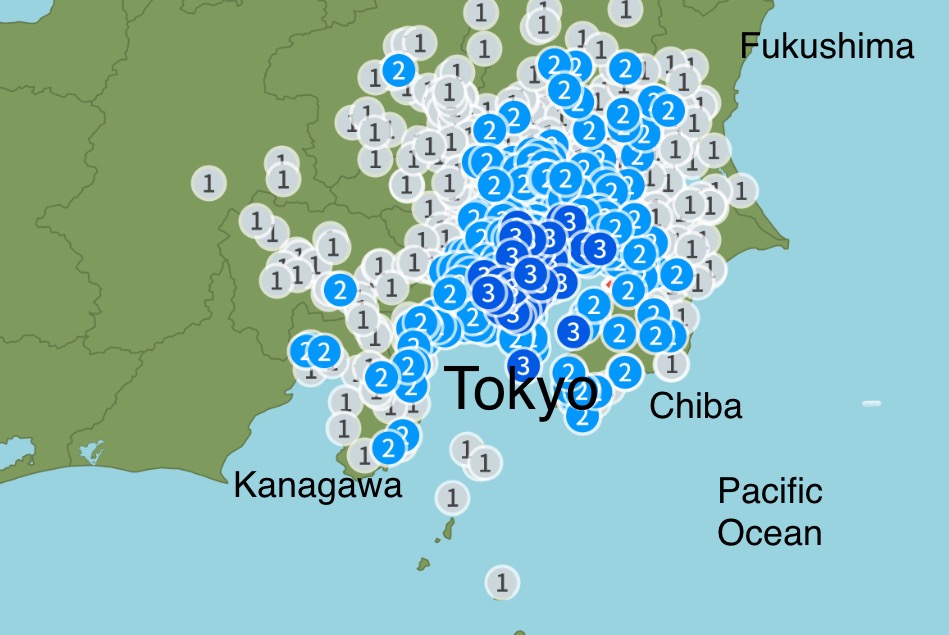
A powerful earthquake struck the Greater Tokyo area, causing alarm among residents. The earthquake, which registered a magnitude of 6.1 on the Richter scale, occurred early this morning, resulting in building tremors and triggering emergency alerts. So far, there have been no reports of serious injuries or significant damage, but local authorities are continuing to assess the situation.
The earthquake occurred at 6:30 AM local time, with its epicenter located offshore, approximately 50 kilometers from the Japanese capital. Residents in surrounding areas, including Tokyo and Yokohama, felt the tremors. The Japan Meteorological Agency has issued warnings about the possibility of aftershocks.
Details of the Event
According to initial reports, no severe damage has been recorded, but some buildings experienced shaking, leading to the evacuation of certain areas as a precautionary measure. Train services were briefly suspended, affecting transportation in the capital. Eyewitnesses noted that they felt the tremors for a short period but did not expect the earthquake to be of this magnitude.
It is worth mentioning that Japan is located in an active seismic zone and frequently experiences earthquakes ranging from mild to strong. The Japanese government has developed comprehensive emergency plans to deal with such events, which have contributed to reducing potential damage.
Background & Context
Historically, Japan has experienced many devastating earthquakes, such as the Kobe earthquake in 1995 and the Fukushima earthquake in 2011. These events led to the development of an advanced early warning system, which has helped to minimize human and material losses. Additionally, Japanese culture includes strategies for dealing with earthquakes, such as constructing earthquake-resistant buildings and training residents on how to act in emergencies.
While earthquakes are considered a part of daily life in Japan, each new event raises concerns among the population, especially amid current geopolitical tensions in the region. Japan is regarded as one of the most prepared countries for natural disasters, yet the fear of earthquakes remains present in the minds of citizens.
Impact & Consequences
While no significant damage has been recorded thus far, the earthquake may impact economic activities in the region. Tokyo, being one of the largest economic capitals in the world, heavily relies on infrastructure stability. Any disruption in essential services or transportation could affect businesses and lead to economic losses.
Moreover, the earthquake may increase public awareness about the importance of emergency preparedness, potentially prompting the government to enhance awareness and training programs for residents. It could also affect tourism, as some visitors may hesitate to travel to the area due to fears of earthquakes.
Regional Significance
Although the earthquake is thousands of kilometers away from the Arab region, significant natural events like this attract global interest. Such occurrences could enhance international cooperation in disaster management and information exchange regarding emergency preparedness.
Earthquakes also remind Arab countries of the importance of strengthening their infrastructure to face natural disasters, especially amid climate changes that may lead to increased disaster occurrences. It is crucial for Arab nations to adopt effective strategies for dealing with natural disasters, including earthquakes, to ensure the safety of their citizens.
In conclusion, the earthquake that struck the Greater Tokyo area serves as a reminder of the power of nature and the importance of being prepared to face it. As the situation continues to be assessed, attention remains focused on Japanese authorities for further details regarding the impact of this event.