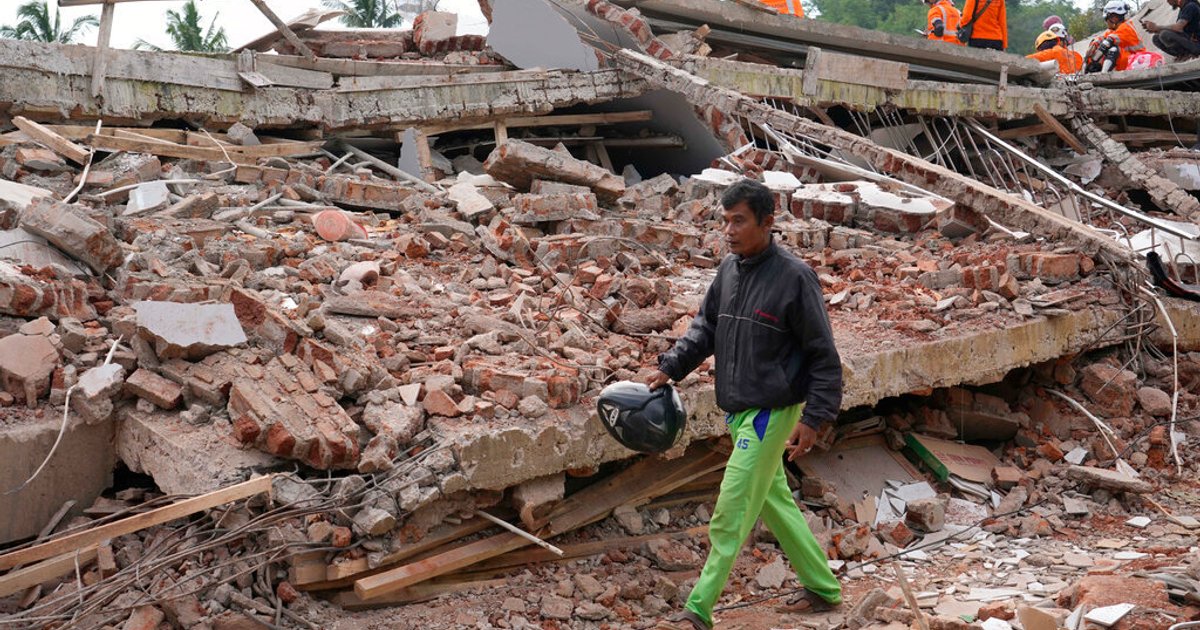
A magnitude 7.6 earthquake struck the Ternate region in Indonesia this morning, resulting in one death and injuries to another person. The quake, which occurred off the coast of Batang Dua, led to partial destruction of buildings in Manado, where rescue teams continue efforts to clear debris and assist those affected.
According to reports from the Indonesian Meteorology and Climatology Agency, the earthquake occurred at 5:48 AM local time, with its epicenter located at a depth of 33 kilometers and 129 kilometers from the city of Bitung. Aftershocks caused panic among residents, prompting many to flee their homes in search of safety.
Details of the Event
The spokesperson for the North Sulawesi Search and Rescue Agency, Nuriadin Gumiling, reported that rescue teams are working to remove debris from the Koni building in Manado, which sustained significant damage. He explained that materials are still trapped in the main building, complicating cleanup efforts.
He also noted that activities in the area are beginning to return to normal, but warnings remain in effect. One fatality has been recorded, along with another person suffering a leg fracture due to jumping from buildings during the earthquake. Medical care has been provided to the injured.
Background & Context
Indonesia is known as one of the most earthquake-prone countries due to its location on the Pacific Ring of Fire, where several tectonic plates meet. The country has experienced numerous devastating earthquakes in recent years, leading to loss of life and property destruction.
In 2004, a powerful earthquake struck the Sumatra region, resulting in a horrific tsunami that claimed the lives of over 230,000 people. Since then, the Indonesian government has taken significant steps to improve early warning systems and emergency response.
Impact & Consequences
This incident highlights the importance of preparedness for natural disasters, as earthquakes can cause severe damage in a short period. Previous experiences have shown that rapid response and coordination between government agencies and civil society can save lives.
These incidents also require international community support, as humanitarian organizations can play a crucial role in providing assistance to those affected. Several countries have expressed their readiness to offer support if needed.
Regional Significance
While earthquakes in Indonesia may seem distant from the Arab region, these events remind us of the importance of being prepared for natural disasters. Many Arab countries, such as Lebanon and Syria, are also located in seismic zones, necessitating the strengthening of early warning systems and emergency planning.
Moreover, cooperation between Arab countries and those facing similar challenges can contribute to improving disaster response, enhancing communities' ability to cope with crises.