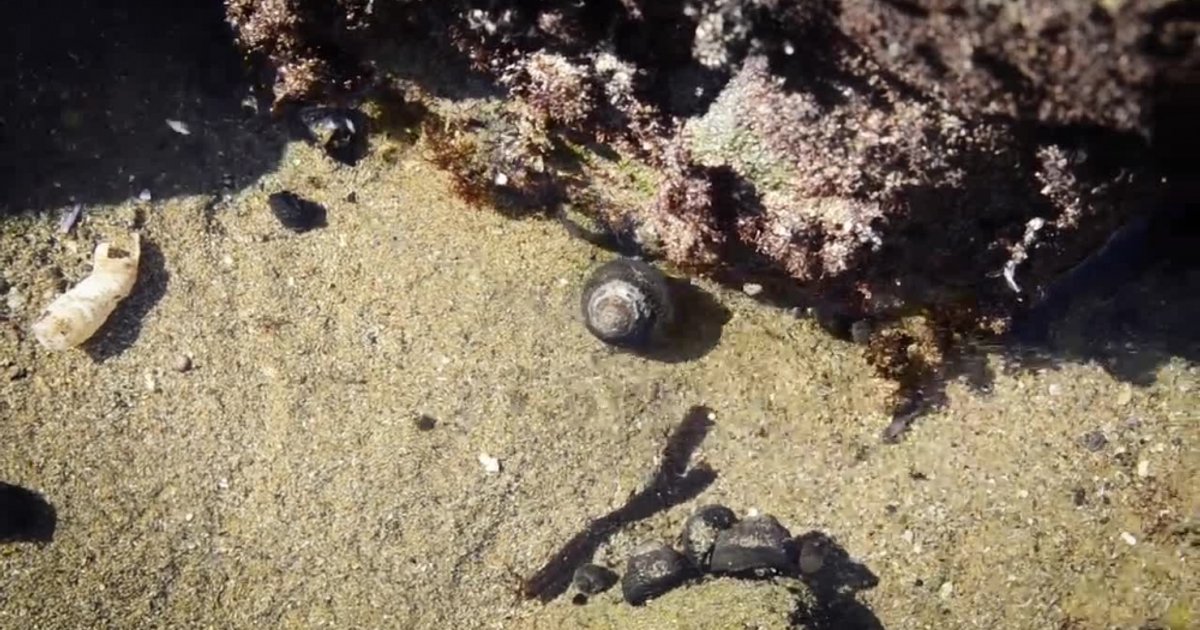
In an unexpected scientific event, the appearance of a "moving egg" during an examination of crab eggs in the lab of parasitologist Dr. Armand Kouris at the University of California left students in awe. The egg was moving on its own, which is unusual for crab eggs that typically only move due to water or external vibrations.
The students reacted with astonishment and humor, with some joking about the presence of a sprite inhabiting the egg. However, Dr. Armand, who was present, anticipated that this discovery could mark the beginning of something new. Indeed, a study published in the journal Ecology confirmed that the movement was the result of a small parasitic organism known as Nicothoid copipid.
Details of the Discovery
Historically, the existence of copipids affecting crab eggs has been documented, but scientists have struggled to provide a detailed description of their life cycle. They were first discovered in the 1930s in France, where they were described by French researchers Bloch and Galian. Although recorded in parts of England, they were not seen again until the 1970s.
In the 1950s, a German researcher noted their presence along the German coast but pointed out the difficulty of detecting them. Another group was found in Norfolk, England, but they were not observed again until the 1970s.
When a student reported the moving egg to Dr. Armand, he immediately recognized it as Nicothoid, which feeds on local yellow crab eggs. This was the first observation of this parasite on the Pacific coast of the United States.
Background & Context
The study of parasites is an important aspect of biology, as they play a vital role in understanding ecological balance. Parasites like Nicothoid copipid pose significant challenges to the reproduction of marine organisms, directly impacting the marine ecosystem.
Studying these organisms requires considerable effort, as Dr. Armand and his students collected crabs from local waters and placed them in a marine lab to observe the life cycle of the parasitic organisms. Research has shown that Nicothoid copipid spends nearly its entire life on crab eggs, making it a significant threat to the reproduction of these creatures.
Impact & Consequences
Researchers concluded that Nicothoid copipid lives at the expense of the new generation of crabs, rather than on the crab itself. This means that its presence could lead to a significant decline in crab populations, affecting the ecological balance in the region.
These discoveries are important not only for scientists but also for fishermen and coastal communities that rely on crabs as a food and economic source. Understanding how these parasites affect marine organisms can help develop strategies for conserving marine species.
Regional Significance
In the Arab region, seas and oceans are vital sources of food and economy. Therefore, understanding the impact of parasites on marine organisms can have significant implications for food and economic security. These discoveries also open the door for further research into biodiversity in Arab seas.
In conclusion, this discovery represents an important step in understanding the complex relationships between marine organisms and the parasites that affect them. It underscores the importance of scientific research in protecting biodiversity and maintaining marine ecosystems.