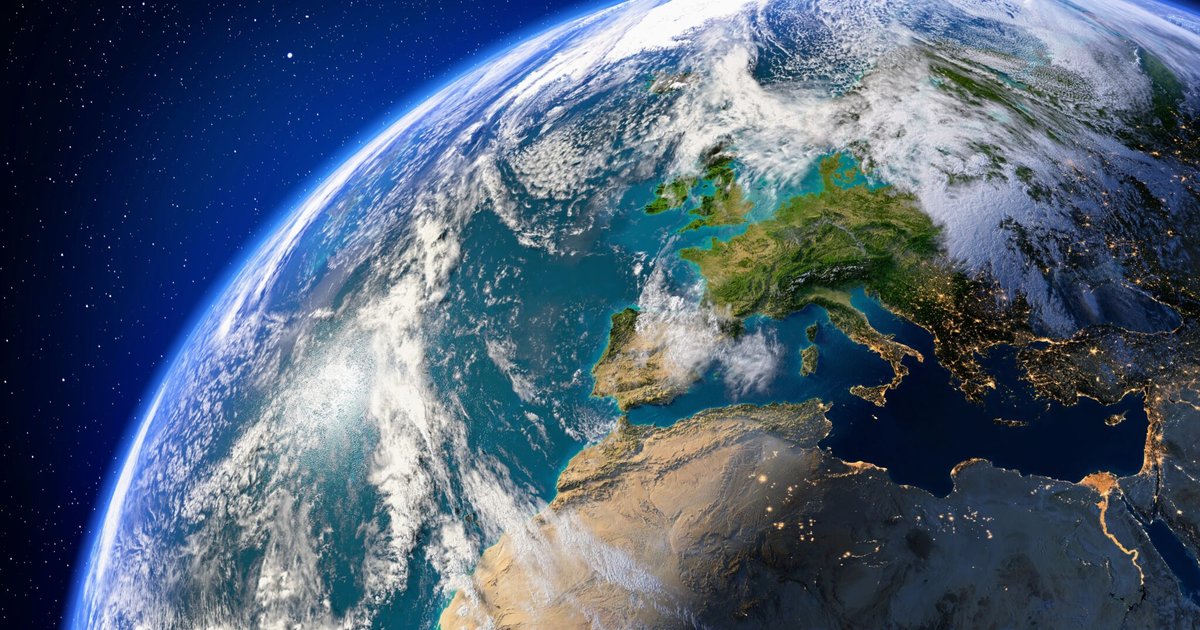
A new study has provided a clearer picture of the history of oxygen in Earth's atmosphere over the past 3.5 billion years, indicating that the gradual rise in levels of this gas was primarily linked to the expansion of life on the planet. In contrast, geological processes associated with the movement of tectonic plates played a role in causing periodic fluctuations in these levels throughout geological time.
Tectonic plates are the massive sections of the Earth's crust that move very slowly over the mantle layer within the Earth, leading to the movement and sometimes merging of continents into a supercontinent, followed by their separation again over millions of years.
Details of the Study
The study, published on March 16 in the journal Proceedings of the National Academy of Sciences (PNAS), relied on integrating machine learning techniques with the chemical analysis of an ancient mineral preserved in sedimentary rocks. This integration allowed researchers to reconstruct the history of oxygen in the atmosphere with a higher temporal resolution than was previously available in earlier studies.
Oxygen is considered one of the most important elements that shaped the history of life on Earth. Before it accumulated in significant amounts in the atmosphere, life was mostly limited to simple microscopic organisms capable of living in environments nearly devoid of oxygen. As levels of this gas rose, a significant shift occurred in the planet's chemistry, paving the way for the proliferation of multicellular organisms.
Background & Context
Despite the importance of this phase in Earth's history, scientists have struggled to determine how and when oxygen levels rose throughout geological history. This is due to the limited and scattered geochemical records that preserve traces of these changes in ancient rocks, as explained by the study's lead author, Jean G. Gang, an associate professor of Earth Sciences at the China University of Geosciences.
To overcome this challenge, researchers focused on a mineral called pyrite, which forms in ancient marine environments. It is characterized by its shiny golden color and retains small amounts of chemical elements known as rare elements, which carry important information about the chemical conditions of the oceans and atmosphere at the time the mineral formed.
Impact & Consequences
The results of the study showed that the level of oxygen in the atmosphere gradually increased over long geological time, a phenomenon known as the gradual oxygenation of Earth. Researchers link this trend to the expansion of biomass on the planet, particularly with the spread of organisms capable of photosynthesis.
During this process, some microorganisms, such as cyanobacteria, use sunlight to convert carbon dioxide and water into organic materials, releasing oxygen as a byproduct. As the numbers of these organisms increased, oxygen production gradually rose and accumulated in the atmosphere, leading to significant environmental changes that allowed for the spread of more complex life forms.
Regional Significance
This study is particularly significant for the Arab region, where many countries face environmental challenges related to climate change and natural resources. Understanding the history of oxygen and its changes can help develop effective strategies to adapt to current environmental changes.
In conclusion, this study reshapes our understanding of Earth's history, highlighting the complex relationship between life and geological processes in shaping the atmosphere we live in today.