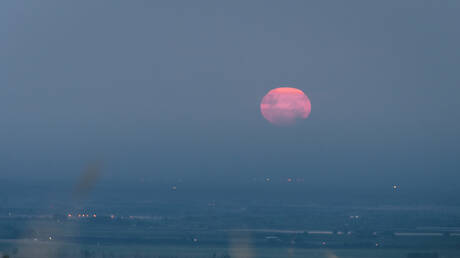
Astronomy enthusiasts are gearing up for a series of exciting astronomical phenomena throughout April, featuring events that will amaze observers from the beginning of the month until its end. Among these phenomena is the appearance of the pink moon, along with a comet that approaches the sun, making this month an ideal time for sky watching.
The list of astronomical phenomena in April includes many notable events, where astronomy lovers can enjoy watching planets, stars, and moons in a magnificent harmony. These phenomena are not just beautiful sights; they carry a wealth of scientific information that piques the curiosity of both scientists and astronomy enthusiasts alike.
Details of the Event
April will kick off with the appearance of the pink moon, which is considered one of the rare astronomical phenomena. This moon is known for its light color, which stands out in the sky. It is believed that this name is derived from the pink flowers that bloom in spring, adding a special beauty to the sky.
In addition, the month will witness the appearance of a comet approaching the sun, an event that captivates astronomers. This comet presents a rare opportunity to observe the behavior of comets and their impact on the solar system, allowing scientists to study its components and characteristics.
Background & Context
Historically, astronomical phenomena have been regarded as signs of major events in various cultures. In many ancient civilizations, comets were seen as omens of change or warning. Today, with the advancement of astronomical sciences, we can better understand these phenomena, opening new horizons for research and study.
Technological advancements in astronomy, such as advanced telescopes and space observatories, have contributed to improving the accuracy of astronomical observations. This enables scientists to study astronomical phenomena in greater detail, enhancing our understanding of the universe.
Impact & Consequences
Astronomical phenomena provide an opportunity to enhance scientific awareness among the public. By organizing events to observe these phenomena, schools and scientific centers can encourage young people to take an interest in astronomy. This can lead to an increase in the number of individuals interested in science and technology fields.
Moreover, these phenomena contribute to boosting astronomical tourism, as many seek to witness these unique events. This can have a positive impact on the local economy in areas considered ideal observation points.
Regional Significance
The Arab region is rich in astronomical culture, with ancient civilizations such as the Islamic civilization having significantly contributed to the development of astronomy. Today, Arab countries can capitalize on these astronomical phenomena to enhance scientific tourism, contributing to the strengthening of cultural and scientific identity.
These events also represent an opportunity to revive interest in astronomy in the Arab world, potentially leading to increased investments in this field and fostering collaboration among Arab countries in astronomical research.
In conclusion, April represents a wonderful opportunity for astronomy enthusiasts to follow a series of stunning astronomical phenomena. From the pink moon to the comet that approaches the sun, these events serve as a reminder of the beauty and complexity of the universe, inspiring us to explore further.