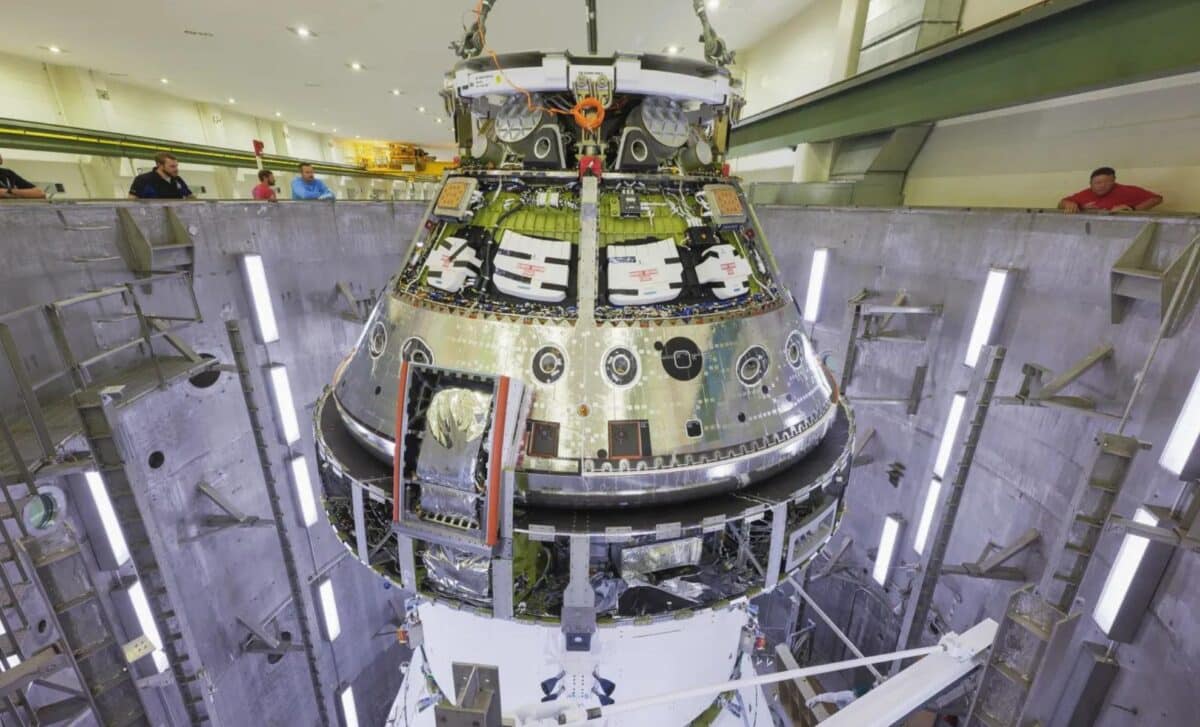
The American space agency (NASA) has announced that the Artemis II mission has achieved remarkable success since its launch on April 1, showcasing the Orion spacecraft's performance exceeding expectations. This mission is the first to test the spacecraft with a human crew, marking an important step towards returning to the moon.
During the first six days of the mission, the Orion spacecraft proved its ability to function as planned, successfully executing all launch phases. Engineers noted that each stage of the launch was 'normal,' reflecting a high level of precision in operations.
Event Details
Following the launch of the Space Launch System (SLS) rocket from Kennedy Space Center, the mission achieved significant milestones. Two planned trajectory corrections towards the moon were canceled, as the trajectory was so precise that no adjustments were necessary. Dr. Simeon Barber, a space scientist, described this achievement as a 'major success.'
About 36 hours after launch, the Orion spacecraft ignited its main engine for five minutes and fifty-five seconds, placing it on a circular path towards the moon. Dr. Lori Glaze, head of the Artemis program, described this process as 'flawless.'
Background & Context
The Artemis II mission is part of the Artemis program, which aims to return humans to the moon by 2028. This mission follows the uncrewed Artemis I mission that launched in November 2022. However, the technical challenges faced in previous launches have raised questions about the ambitious timeline of the program.
Historically, American space programs have relied on previous achievements such as the Apollo program, which saw humans land on the moon for the first time in 1969. Nevertheless, technological advancements and new innovations in space have bolstered hopes for a return to the moon.
Impact & Consequences
The successes of the Artemis II mission represent a significant step towards achieving larger goals in space exploration. The mission demonstrated the Orion spacecraft's ability to handle harsh conditions in space, enhancing confidence in the possibility of sending humans back to the moon.
Furthermore, this mission may inspire future generations of scientists and engineers, reflecting humanity's capacity to achieve great milestones in space. Many experts have pointed to the importance of this moment in enhancing international cooperation in space exploration.
Regional Significance
Although the Artemis II mission focuses on the moon, it has potential implications for the Arab region. With the growing interest in space among Arab nations, this mission may inspire them to invest in their own space programs.
Many Arab countries, such as the United Arab Emirates, are seeking to enhance their capabilities in space, reflecting an increasing interest in technology and innovation. The Artemis II mission could serve as a catalyst for these nations to expand their horizons in space exploration.
In conclusion, the Artemis II mission represents a new beginning in humanity's journey into space. As the Orion spacecraft approaches its return to Earth, all eyes remain on the outcomes of this mission and what it will mean for the future.