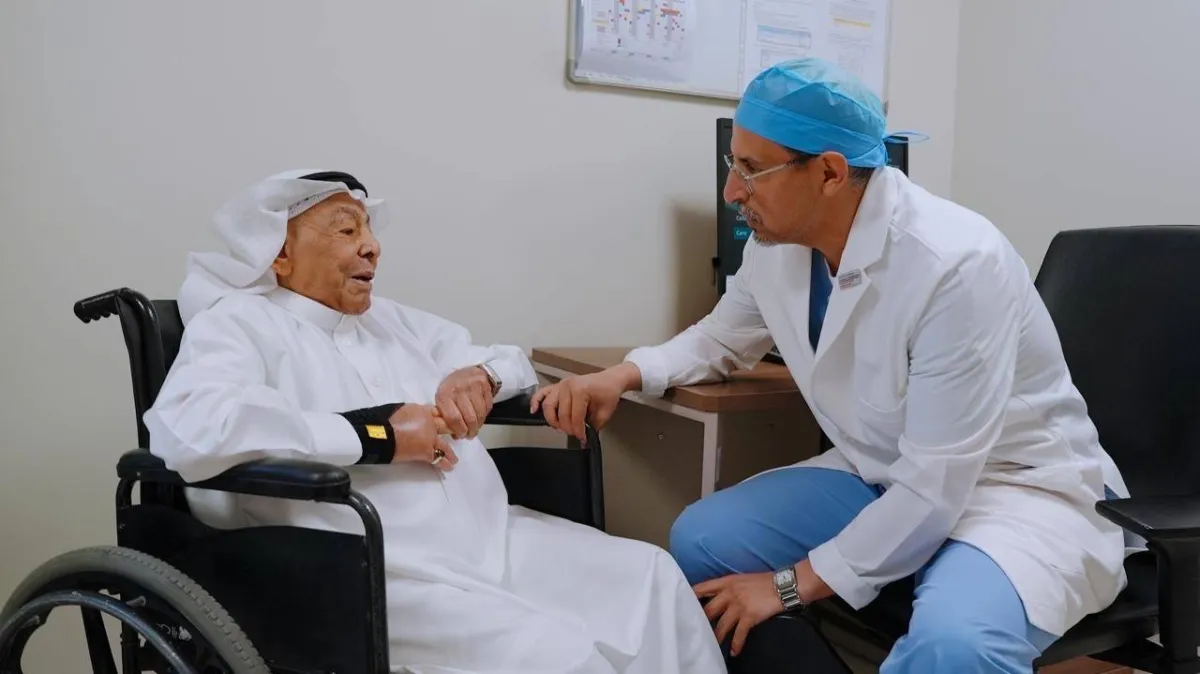
The Johns Hopkins Aramco Healthcare Center has achieved a significant medical milestone by performing an innovative heart surgery on a 102-year-old patient, which is considered a rare precedent that reflects the evolution of specialized healthcare in the Kingdom of Saudi Arabia.
The patient, Ahmed Al-Zayer, was suffering from a complex health condition characterized by atrial fibrillation, a disorder that leads to irregular heartbeats. He had previously suffered a stroke, complicating his health condition further. Over time, the blood-thinning medications he was taking for prevention turned into a risk factor, causing recurrent internal bleeding and severe anemia, which led to a cycle of frequent hospitalizations.
Details of the Procedure
Given this complex condition, the medical team faced a significant challenge in how to reduce the risk of stroke without exposing the patient to bleeding complications. After careful evaluation by a multidisciplinary team, it was decided to resort to a minimally invasive procedure to close the left atrial appendage using the WATCHMAN™ device, a therapeutic option used globally for patients who cannot continue on blood thinners.
Although this procedure is common in modern medical practices, its application on a patient over the age of one hundred is considered exceptional, reflecting the level of confidence in the advanced medical capabilities of the center. The surgery was successfully performed without complications, and the patient left the hospital within just 24 hours.
Background & Context
This step comes at a time when the healthcare system in Saudi Arabia faces increasing challenges, with rising rates of chronic diseases such as obesity, hypertension, and diabetes, alongside an increasing elderly population, which raises the incidence of heart diseases and disorders. This achievement underscores the importance of adopting innovative therapeutic solutions tailored to the needs of each patient, especially among those most vulnerable to complications from traditional treatments.
Dr. Saad Al-Husniya, a cardiology consultant at the center, noted that the uniqueness of the case extends beyond its medical complexity to question the limits of age in receiving treatment. The team chose a customized therapeutic approach instead of settling for conventional solutions, emphasizing that "surrendering to limited options was not in the patient's best interest."
Impact & Consequences
The success of this surgery represents a shift in how to deal with cases of elderly patients, affirming that aging does not necessarily mean the end of treatment options. This achievement reflects a trend towards providing patient-centered healthcare that relies on personalization and innovation, rather than adhering to traditional age-related standards.
Patient Ahmed Al-Zayer, who returned home in better condition, confirmed that his experience changed his perspective on treatment options at an advanced age, noting that communication with doctors and exploring possible alternatives can open new horizons even in later life stages.
Regional Significance
This achievement marks an important step in enhancing specialized healthcare in the Arab region, where it can serve as a model for dealing with complex cases of the elderly. It also reflects the importance of innovation in delivering treatments, contributing to improving the quality of life for patients of all ages.
In conclusion, the success of this surgery demonstrates that medical advancement can yield positive results even in the most complex cases, opening new horizons for healthcare in Saudi Arabia and the region.