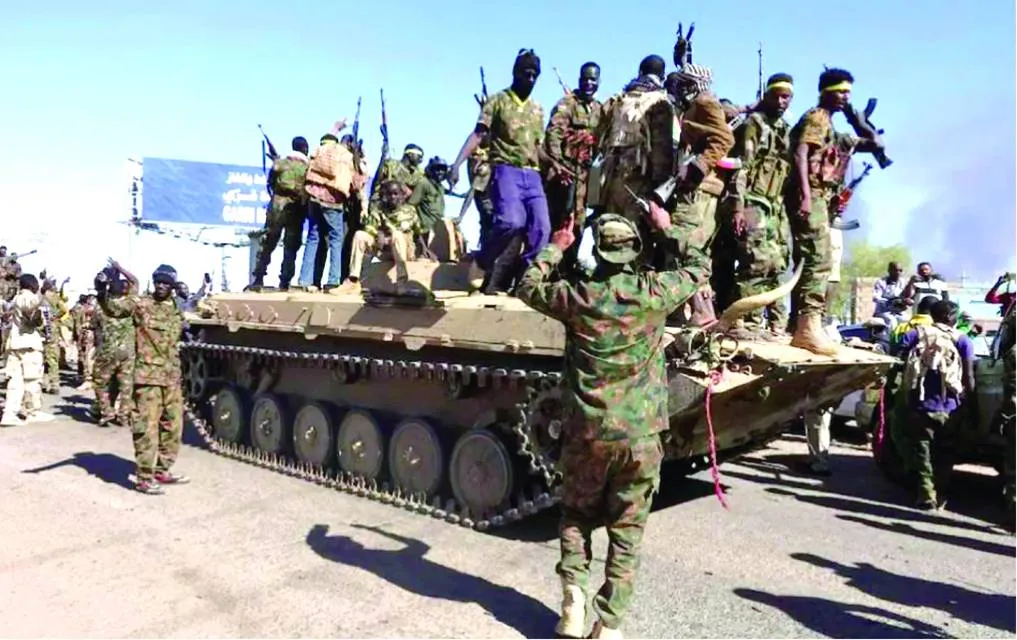
The Sudanese army has announced the recovery of the strategic Kili area in Blue Nile state after a series of fierce battles with the Rapid Support Forces. The army confirmed that military operations resulted in the destruction of military equipment and inflicted heavy losses on the rebel forces.
In an official statement, the army reported that the Fourth Infantry Division and its supporting forces managed to liberate the Kili area, located on the outskirts of the town of Kurmuk, after confrontations with the Rapid Support Forces and other rebel groups led by Joseph Toka. The army also showcased video footage documenting its forces' presence within the town.
Details of the Event
The army clarified that military operations will continue until the rebellion is eradicated from all areas of the state and security and stability are reinforced. For his part, the governor of Blue Nile state, Ahmed Al-Omdah, stated that the victory achieved by the Fourth Infantry Division represents the beginning of the end of the rebellion in the region, indicating that signs of complete liberation will soon be visible.
The Kili area holds strategic importance as it lies on the main road connecting the cities of Damazin, the capital of Blue Nile state, and Kurmuk, which is near the Ethiopian border. This area fell into the hands of the Rapid Support Forces and its ally, the Sudan People's Liberation Movement – North, last March.
Background & Context
These developments come at a time when Sudan is witnessing an escalation in military tensions, with the Sudanese army accusing the Ethiopian government of supporting the Rapid Support Forces, including using Ethiopian territory to launch drones into Sudan. Recent days have seen clashes on the outskirts of the city of Qaisan, the second-largest city in Blue Nile state.
In a related context, the Sudan People's Liberation Movement – North, one of the main forces within the establishment coalition supported by the Rapid Support Forces, announced its control over the towns of Dukhan, Keren Keren, and Khour Al-Hassan in the Kurmuk district, confirming its forces' advance towards the city of Qaisan.
Impact & Consequences
Concerns are growing over the escalation of violence in Sudan, where approximately 700 civilians have been killed since the beginning of the year due to mutual clashes between the Sudanese army and the Rapid Support Forces. The state of South Kordofan has also witnessed fierce battles between the two sides, further complicating the security situation in the country.
At the same time, 15 people were killed and dozens injured due to a drone strike targeting a civilian transport truck near the city of Abu Zabad, highlighting the risks faced by civilians amid the escalating military actions.
Regional Significance
The events in Sudan directly affect the stability of the region, as armed conflicts contribute to the spread of chaos and an increase in the number of displaced individuals. Additionally, rising tensions between Sudan and Ethiopia could lead to negative repercussions on the relations between the two countries, necessitating international intervention to resolve the conflict.
In conclusion, the situation in Sudan remains complex, with military, political, and humanitarian dimensions intertwining, requiring intensive efforts from both the government and the international community to achieve stability and peace in the country.