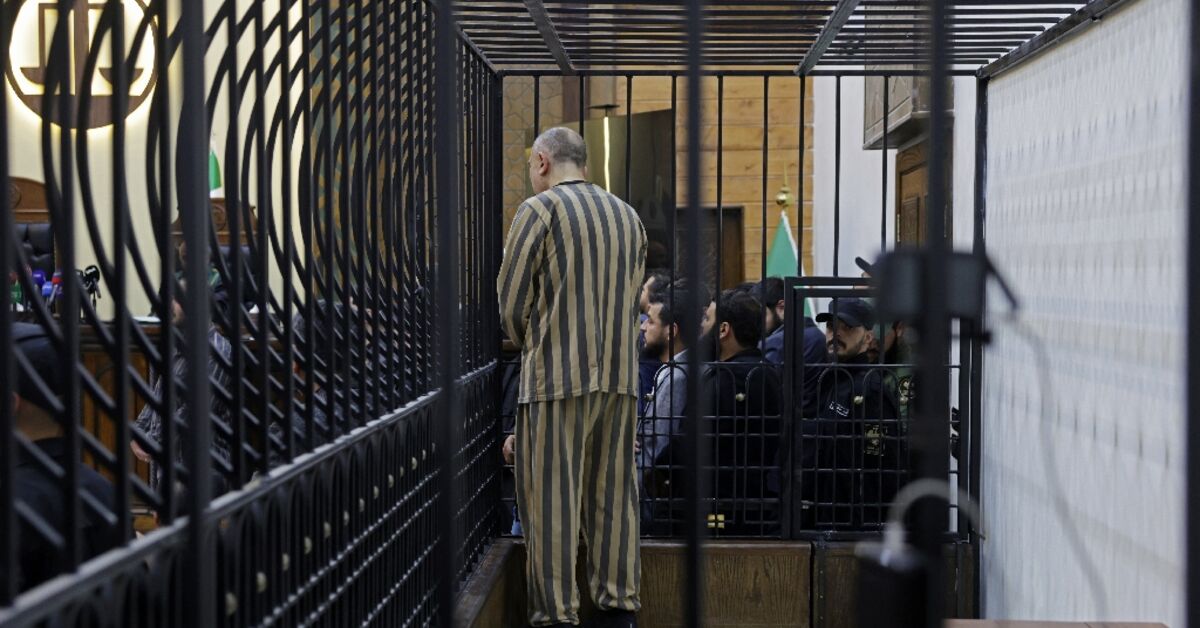
A Syrian court on Sunday held its first session to try ousted President Bashar al-Assad and several senior officials from his government. The session, presided over by Judge Fakhr al-Din al-Aryan, saw the presence of a relative of Assad, former officer Atef Najib, who appeared in court in shackles. Meanwhile, Assad and his brother Maher have left the country and will be tried in absentia.
Judge al-Aryan announced at the beginning of the session: "Today we begin the first transitional justice trials in Syria," reflecting a significant step towards achieving justice in a country that has suffered years of conflict and violence. This trial comes at a sensitive time, as many Syrians seek to hold accountable those responsible for the violations committed during the civil war.
Details of the Event
This trial is the first of its kind since the onset of the Syrian conflict in 2011, during which numerous serious human rights violations have been documented. This step may represent a new beginning in the path of transitional justice, aimed at holding accountable those responsible for crimes against humanity.
It is noteworthy that Atef Najib held a high-ranking position in the Syrian security apparatus, raising questions about his role in the violations that occurred. He was arrested earlier this year and is seen as a symbol for many officials who may face justice in the future.
Background & Context
Since the outbreak of the Syrian revolution, the country has witnessed an escalation of violence and crimes committed against civilians. The Syrian government, under the leadership of Bashar al-Assad, has been accused of committing serious violations, including the use of chemical weapons, torture, and arbitrary arrests. This trial is part of international efforts to pressure the Syrian regime to achieve justice.
Despite many countries imposing sanctions on the Syrian regime, legal accountability within the country has been limited. This trial represents a step towards achieving justice and may open the doors for further trials in the future.
Impact & Consequences
This trial is considered a milestone in modern Syrian history, as it could lead to a change in the dynamics of the conflict. If this trial is successful, it may encourage more victims to speak out and report the violations they have suffered, thereby enhancing transitional justice efforts.
Additionally, this trial could affect international relations with the Syrian regime, potentially prompting some countries to reassess their stance towards the current government. Should the charges be proven, it could lead to increased international pressure on Assad and his associates.
Regional Significance
The trial of Assad and his associates is significant not only for Syria but for the entire Arab region. This trial could serve as a model for other countries that have witnessed human rights violations, promoting a culture of accountability and justice.
As many Arab countries strive for stability, holding accountable those responsible for crimes may help build trust between governments and their peoples. This trial could mark the beginning of a new phase of justice in the region.
In conclusion, this trial represents an important step towards achieving justice in Syria and may open the doors for further prosecutions. Achieving transitional justice is essential for building a better future for the Syrian people.