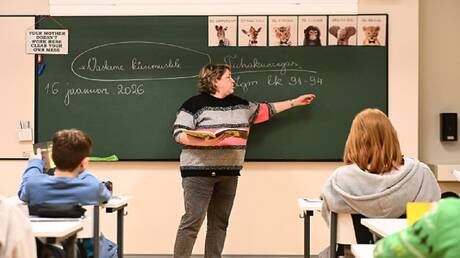
The authorities in Tallinn, Estonia, are seeking to reinstate education in Russian in some schools due to a severe shortage of teachers proficient in Estonian. This decision is part of the government's efforts to address the challenges facing the educational system in the city.
Russian is considered one of the main languages in Estonia, spoken by a significant portion of the population, especially in areas with a high density of Russian speakers. However, education in Russian has declined in recent years due to educational policies that focus on promoting the Estonian language.
Details of the Initiative
According to reports from the Estonian Public Broadcasting (ERR), local authorities are considering allowing some schools to offer education in Russian again, in response to the increasing needs of students and parents. This decision comes at a time when the educational system is facing significant challenges, including a shortage of qualified teachers.
Reports indicate that many schools in Tallinn are struggling to find teachers proficient in Estonian, negatively impacting the quality of education. In this context, the return to education in Russian may serve as a temporary solution to address this crisis.
Background & Context
Historically, Russian was taught in many schools in Estonia, but after the country regained independence from the Soviet Union in the early 1990s, steps were taken to promote Estonian as the official language. This led to a reduction in education in Russian in schools, sparking widespread debate about the rights of linguistic minorities.
In recent years, calls for the reinstatement of education in Russian have intensified, particularly from parents who wish to preserve their children's cultural identity. However, this issue remains sensitive in the context of relations between Estonia and Russia, where the Russian language is seen as a symbol of cultural identity for many citizens.
Impact & Consequences
If this decision is implemented, it could have a significant impact on the educational system in Tallinn. On one hand, it may improve the quality of education for Russian-speaking students and enhance their academic opportunities. On the other hand, it could exacerbate linguistic and cultural divisions within the community, increasing tensions between different groups.
This move may also provoke reactions from the central government, which may view it as a regression in efforts to promote the Estonian language. If the decision is enacted, it will be important to monitor how it affects relations between the Russian-speaking community and local authorities.
Regional Significance
This issue highlights the importance of education in promoting cultural and linguistic identity, a matter of concern for many Arab countries with multilingual communities. Tallinn's experience could serve as an important lesson for countries striving to balance the promotion of the official language while protecting the rights of linguistic minorities.
Ultimately, the question of education in Russian in Tallinn remains a topic worth following, as decisions made in this context could influence the future of education and cultural relations in the country.