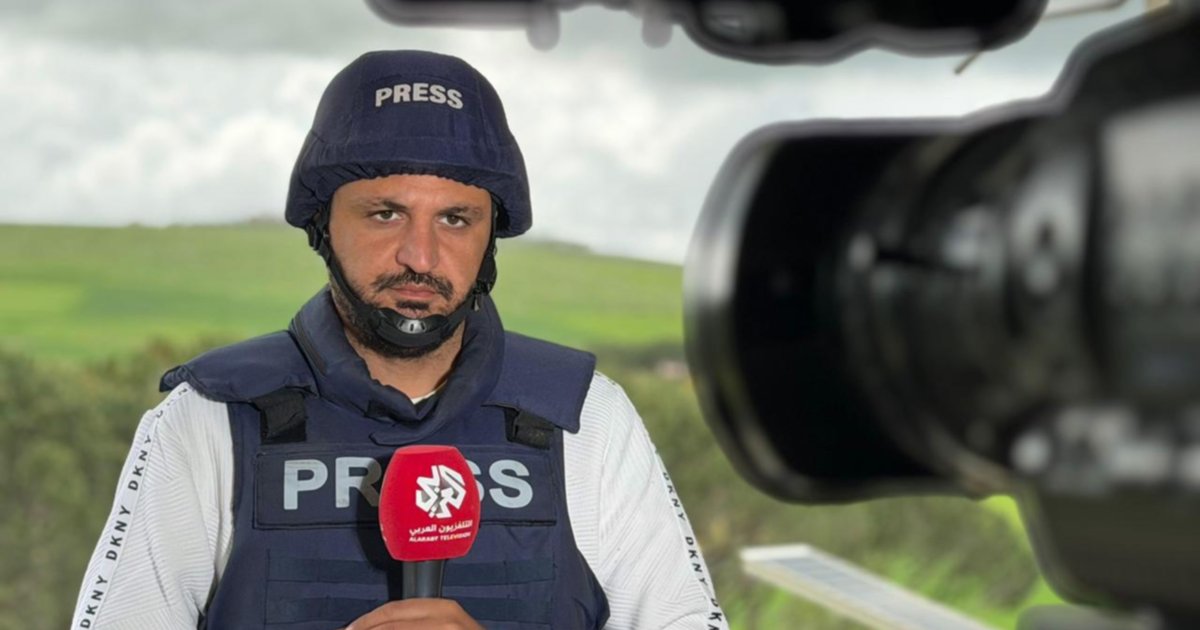
Since the onset of Israeli military operations in October 2023, journalistic work in southern Lebanon has become more perilous than ever. It is no longer just about covering events; it has turned into a personal confrontation with fear, as journalists face direct attacks.
On March 19, RT correspondent Steve Sweeney and video journalist Ali Reza Sobhi were attacked by Israeli forces while covering previous strikes on the Qasimiya Bridge. Despite clearly identifying themselves as journalists, they were not spared from being targeted.
Details of the Attacks
The experience of Rami Al-Kaadi, who works in the border village of Ibl as-Saqi, reflects the reality for journalists in the area. Al-Kaadi states that helmets and bulletproof vests have become part of their daily routine, akin to carrying a pen and camera.
Since the beginning of the Israeli attacks, journalists have become part of a target list, attacked merely for being present in the area. On October 13, 2023, Al-Kaadi lost his colleague, journalist Issam Abdullah, who was killed in an Israeli strike. This incident marked a turning point, as journalists realized they were no longer safe even while performing their professional duties.
Background & Context
Historically, Lebanon has witnessed numerous armed conflicts, but the current situation is drastically different. The targeting of journalists has raised alarms about their safety and the implications for freedom of the press. According to United Nations reports, at least 259 journalists have been killed since 2023, including 14 in Lebanon. These numbers reflect an escalation in attacks on media personnel.
The risks faced by journalists significantly impact their ability to cover events objectively, which could affect the information available to the public. The international community has expressed concern over the increasing violence against journalists, emphasizing the need for protective measures.
Impact & Consequences
The rising targeting of journalists in Lebanon raises international concerns regarding press freedom. The alarming statistics highlight a broader trend of violence against media professionals, which threatens the very foundation of free expression. The implications of these attacks extend beyond individual safety; they jeopardize the integrity of news reporting and the public's right to know.
As journalists navigate these treacherous conditions, their ability to report accurately and impartially is compromised. This situation calls for urgent action to ensure the safety of journalists and uphold the principles of a free press.
Regional Significance
The situation in Lebanon serves as a critical indicator of the state of press freedom in conflict zones. The targeting of journalists not only affects local media but also has repercussions for international news coverage. The ongoing violence against journalists in Lebanon could deter media outlets from sending reporters to cover the region, leading to a significant information vacuum.
As the conflict continues, the importance of protecting journalists becomes increasingly evident. Their role in documenting the truth is essential for accountability and transparency in times of crisis.