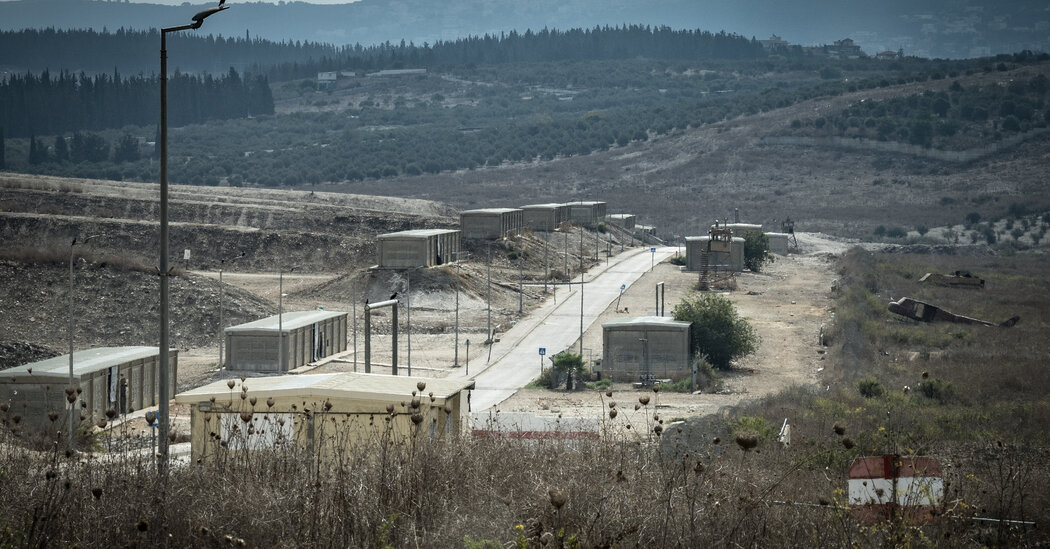
Hezbollah announced on Tuesday that it had carried out a military operation targeting gatherings of Israeli soldiers and a Merkava tank in the town of Qantara, located in southern Lebanon. The operation utilized two attack drones, with reports indicating that Hezbollah also targeted a military D9 bulldozer that was demolishing a house in the area, marking a direct reaction to what the party deemed a violation of the ceasefire by Israel.
These developments come at a sensitive time in the region, where Israeli military officials have acknowledged feeling significant frustration due to the increasing threats from Hezbollah, reflecting an escalation in military activities along the Lebanese-Israeli border. These events raise concerns about a larger escalation in the ongoing conflict between the two sides, which has seen heightened tensions in recent months.
Details of the Incident
In an official statement, Hezbollah confirmed that its military operations are part of defending Lebanese territory, noting that targeting Israeli forces is a natural reaction to the ongoing violations of Lebanon's sovereignty. Images circulated on social media showed the aftermath of the attacks, with the Israeli bulldozer completely destroyed.
On the other hand, the Israeli army indicated that it is closely monitoring the situation and has reinforced its forces along the border in anticipation of any potential escalation. The army's spokesperson confirmed that military operations would continue to protect Israel's security, further intensifying tensions in the region.
Background & Context
Historically, the Lebanese-Israeli border has witnessed numerous armed conflicts, with Hezbollah being one of the prominent armed factions resisting Israeli occupation. Since 2006, when the July War erupted, Hezbollah's military activities have significantly increased, making the area prone to repeated clashes.
The recent violation of the ceasefire occurs at a critical time, as the international community seeks to calm the situation in the Middle East. However, the military escalation from both sides reflects ongoing instability in the region, complicating peace efforts.
Impact & Consequences
The recent escalation could lead to serious repercussions for regional security, potentially triggering a new war between Israel and Hezbollah. This situation may affect neighboring countries and increase the suffering of civilians in Lebanon and Palestine.
Moreover, the continuation of this tension could hinder international efforts to achieve peace and exacerbate sectarian and political divisions in the region. At the same time, some regional powers may exploit this escalation to enhance their influence, further complicating the situation.
Regional Significance
The recent events are indicative of rising tensions in the Middle East, with Arab countries being directly affected by these conflicts. Security in Lebanon and Palestine is closely linked to regional stability, and any escalation could have negative repercussions on the stability of neighboring countries.
These events may also impact relations between Arab countries and Israel, as pressures on Arab governments to address these tensions effectively increase. Under these circumstances, hope for achieving peace remains, but the challenges are significant.