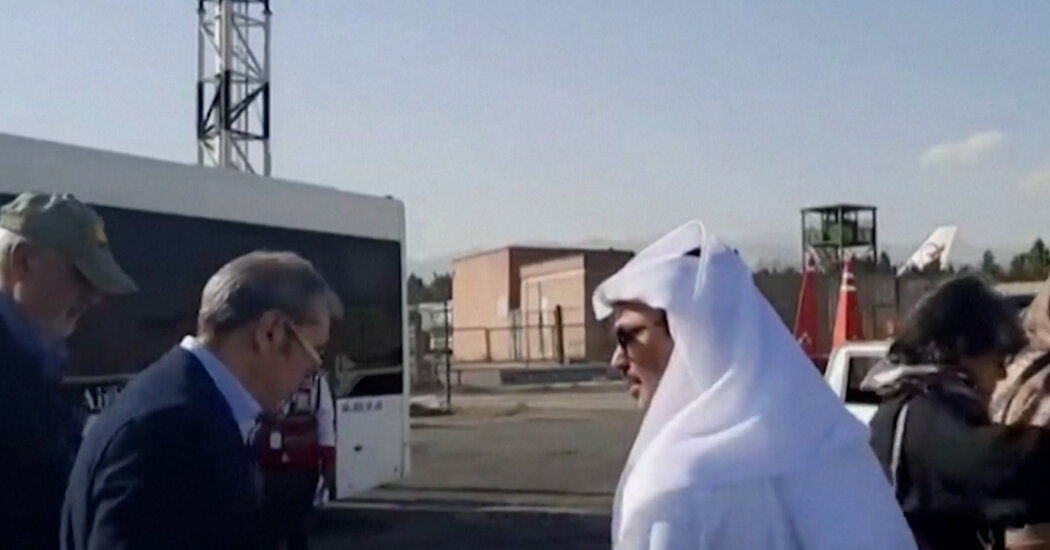
The Iranian authorities have confirmed that the two detained Iranians in the United States are not connected to former Quds Force commander Qassem Soleimani, who was assassinated in a U.S. airstrike in 2020. These statements come as tensions escalate between Tehran and Washington, with Iran seeking to clarify its position under the current circumstances.
In an official statement, the Iranian Foreign Ministry reported that the arrests do not reflect any direct or indirect connection to Soleimani, emphasizing that this move is part of the United States' policy towards Iran. The ministry also stressed the need to respect the rights of Iranian citizens abroad and not to use them as tools in political conflicts.
Details of the Incident
These statements follow the announcement by U.S. authorities regarding the arrest of two Iranians as part of investigations into suspicious activities. This arrest has provoked strong reactions from the Iranian government, which views this step as part of the pressure policy exercised by the United States against Iran.
At the same time, Iran is striving to bolster its position on the international stage, facing multiple challenges including economic sanctions and political pressures. Tehran believes that such arrests will not affect its determination to confront these challenges.
Background & Context
Historically, relations between Iran and the United States have seen increasing tensions since the Islamic Revolution in 1979. These tensions have particularly escalated following Soleimani's assassination, who was a pivotal figure in Iranian politics. Since then, Iran has been working to strengthen its regional and international stance in the face of U.S. pressures.
The recent arrests come at a sensitive time, as Iran seeks to regain its position in the region after years of sanctions and isolation. Many view these events as a reflection of the ongoing struggle between major powers in the Middle East.
Impact & Consequences
These arrests could exacerbate tensions between Iran and the United States, potentially affecting diplomatic efforts to revive the nuclear agreement. Furthermore, these events may lead to an escalation in military or political activities by Iran in the region.
Additionally, these developments could impact Iran's relations with European countries that are trying to maintain dialogue with Tehran. Under these circumstances, European nations may find themselves in a difficult position between supporting Iran or yielding to U.S. pressures.
Regional Significance
The Iranian-American relations are crucial in shaping the stability of the Middle East. Any escalation in these relations could affect countries in the region, especially those suffering from internal conflicts or tensions with Iran.
Recent events may also influence Iran's allies in the region, such as Hezbollah in Lebanon and the Houthis in Yemen, potentially leading to changes in their strategies. Ultimately, the Arab region remains on alert for the outcomes of these tensions.