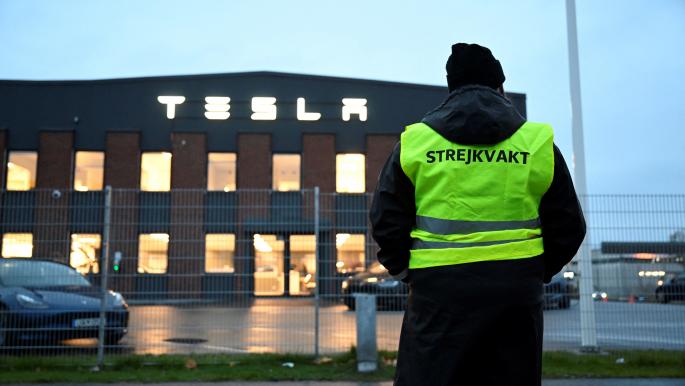
Tesla's crisis in Sweden shows signs of easing as the IF Metall union reduces the scope of its strike. The conflict between the company and labor unions continues, raising questions about the future of labor relations in the country. The strike, which began earlier this month, had sparked widespread concern about Tesla's ability to meet its production targets.
These developments come at a critical time for Tesla, which is seeking to strengthen its presence in the European market. The strike had raised concerns about the company's ability to achieve its production goals. With the reduced scope of the strike, there is hope for a settlement that satisfies all parties.
Event Details
The IF Metall union, which represents workers in the industrial sector, had launched a large-scale strike in protest of working conditions and wages at Tesla's factories. The strike had affected several sites, significantly impacting production. However, the union announced a reduction in the scope of the strike, indicating a possible agreement with the company's management.
Reports suggest that Tesla has begun negotiations with the union, seeking to meet some of the workers' demands. This shift in stance may reflect the company's desire to avoid escalating the conflict and achieve stability in its operations.
Background & Context
Tesla, founded in 2003, has become one of the leading companies in the electric vehicle industry. As demand for electric vehicles grows, the company is seeking to expand its operations in European markets. However, labor-related challenges and workers' rights issues may pose obstacles to its expansion plans.
Historically, Sweden has had strong relationships between labor unions and companies, with unions being an integral part of the economic system. However, tensions between workers and management may increase under current economic conditions, raising concerns about the future of work in the country.
Impact & Consequences
If negotiations between Tesla and the IF Metall union continue in a positive direction, it may lead to improved working conditions at Tesla's factories, enhancing the company's reputation in the market. However, if negotiations fail, the strike may escalate again, negatively affecting production and increasing tensions in labor relations.
These events are significant not only for Tesla but also for the electric vehicle industry as a whole, as they may influence how companies address labor issues in the future. Tesla's success in addressing these issues could serve as a model for other companies in the sector.
Regional Significance
The electric vehicle industry is a promising field in the Arab region, where many countries are seeking to promote the use of clean energy. Developments at Tesla may impact investments by Arab companies in this sector, providing lessons on how to address labor issues.
Furthermore, Tesla's success in resolving labor disputes may encourage Arab companies to adopt similar policies, contributing to improved work environments in the region.
In conclusion, despite the easing of the strike, the labor conflict at Tesla in Sweden remains. However, the signs of easing may open the door to productive dialogue between workers and management, potentially leading to improved conditions in the future.