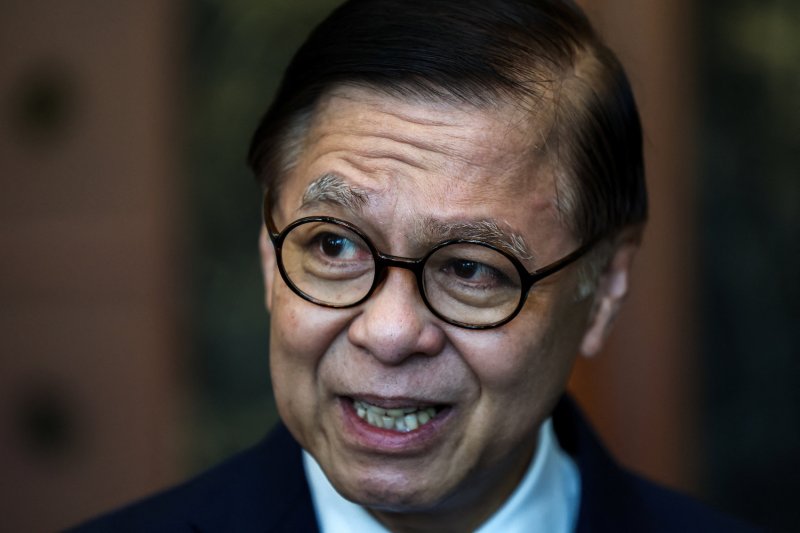
Thai Foreign Minister Don Pramudwinai has expressed his dissatisfaction with the United States, noting that his country has not received any offers of assistance from Washington to address the extensive economic damage resulting from the US-Israeli war against Iran. This was stated in an interview with the Washington Post, where the minister emphasized that this war should never have occurred.
In his remarks, Pramudwinai pointed out that Thailand is facing a crippling economic crisis, prompting the country to turn to Russia and China for support. He mentioned that the United States has not reached out to his country to offer help, despite being aware of the consequences stemming from the war.
Details of the Situation
Pramudwinai stated, "The only offer we received from former US President Donald Trump was related to purchasing American oil and gas." He affirmed that Thailand does not wish to directly condemn the United States, but it believes that the war should not have started in the first place.
Thailand and other Southeast Asian countries are facing significant difficulties due to rising fuel and fertilizer prices caused by shipping disruptions stemming from the conflict in the Middle East. Recently, Agriculture Minister Suriyah Jongrangrian traveled to Moscow to negotiate with Russian officials regarding fertilizers, while Thailand is also seeking to obtain Russian crude oil, despite concerns about violating US sanctions.
Background & Context
Historically, relations between Thailand and the United States have been strong, with the US considered a key ally in the region. However, recent events, including the war in the Middle East, have negatively impacted these relations. Thailand is currently experiencing a worsening economic crisis, leading it to seek alternatives in its foreign policy.
In this context, Pramudwinai indicates that China and Russia may provide more stable alternatives in international relations, stating, "China has presented itself as a more consistent partner." This shift in foreign policy reflects a change in the geopolitical dynamics in the region.
Impact & Consequences
The statements from the Thai Foreign Minister highlight the instability of US policy, as he noted that the goals of the Trump administration are constantly changing. Initially, there were calls for regime change in Iran, and now the focus seems to be on ending the Iranian nuclear program. This shift in objectives reflects uncertainty in US policy, placing its allies in a difficult position.
Pramudwinai also pointed out that Trump's extensive campaign against tariffs has astonished many allies, while cuts to US aid programs have left poor communities around the world vulnerable to diseases and disasters.
Regional Significance
Arab countries are directly affected by conflicts in the Middle East, as disruptions lead to rising prices of essential goods, increasing economic pressures on these nations. The instability of US policy may negatively impact economic and political relations between Arab countries and the United States.
In conclusion, the Thai Foreign Minister's dissatisfaction with the United States reflects a shift in international relations, as countries seek to reassess their alliances in light of changing circumstances. These dynamics may influence regional and global stability in the future.