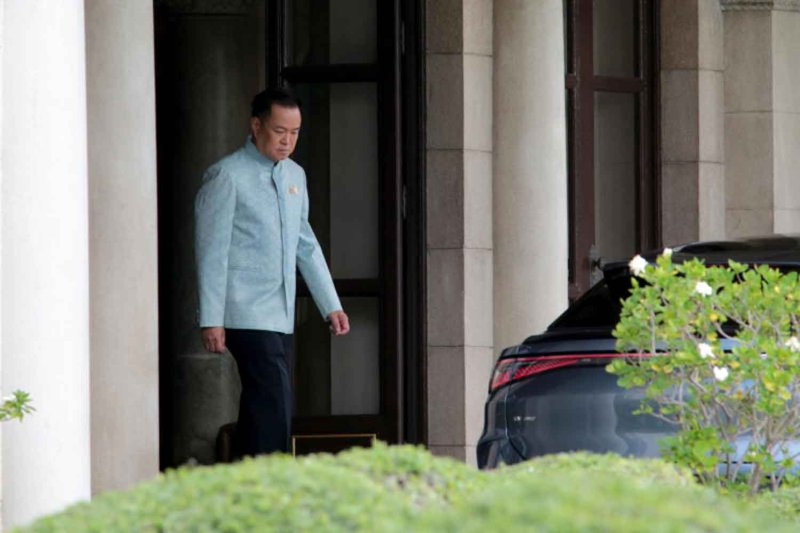
Thai Prime Minister Anutin Charnvirakul has presented his new cabinet for royal approval, after completing the necessary vetting procedures. This move is part of the government's efforts to present its policy statement to parliament before the upcoming Songkran holiday, celebrated in mid-April.
Speaking at the government headquarters on Monday, Charnvirakul confirmed that the proposed cabinet has been signed and submitted according to constitutional procedures. However, he did not disclose details of the appointments, noting that royal approvals remain outside his authority until they are officially ratified.
Details of the New Cabinet
The new government is expected to include 36 positions, including the Prime Minister's role. Charnvirakul assured that the transition would be smooth, as several current ministers are likely to retain their key positions to ensure continuity in government operations.
The policy statement is scheduled to be presented in parliament between April 7 and 9, although the exact date depends on the completion of royal procedures and the swearing-in of the new ministers. The document, reportedly consisting of around 30 pages, is expected to focus on an economic stimulus strategy known as Thailand 10 Plus.
Background & Context
This step is part of an ongoing political process in Thailand, which has seen numerous government changes in recent years. Charnvirakul, who assumed office following the general elections, is striving to achieve political stability and bolster economic growth in the country.
The Thailand 10 Plus strategy encompasses four main pillars: inclusive growth, enhancing national competitiveness, stimulating the economy, and managing debt, alongside industrial development aimed at increasing income. The strategy also includes emergency plans to address four major risk areas: natural disasters, economic instability, national security, and social challenges.
Impact & Consequences
These developments come at a sensitive time for Thailand, as the new government seeks to tackle the economic and social challenges facing the country. The emphasis on ethics and high standards in ministerial appointments is seen as a positive step towards enhancing public trust in the government.
In this context, Nakarin Miktrairat, President of the Constitutional Court, stated that the court cannot initiate investigations independently, indicating that disputes must be formally raised before the court can conduct judicial reviews. The vetting process for ministerial candidates involves several agencies, including the Royal Thai Police, the judiciary, the National Anti-Corruption Commission, the Election Commission, and the Securities and Exchange Commission.
Regional Significance
These events hold significance for the Arab region, reflecting the political and economic challenges faced by many countries. Thailand's experience in enhancing transparency and accountability could serve as a model for Arab nations seeking to improve their governance and build trust between citizens and authorities.
In conclusion, these developments in Thailand illustrate how governments can adapt to modern challenges, opening avenues for new growth and development opportunities, which many in the Arab region are looking forward to.