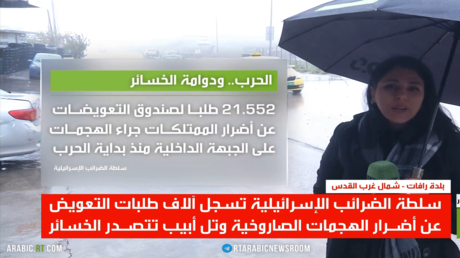
The Israeli Tax Authority has reported receiving thousands of requests for compensation due to damages from rocket attacks since the onset of the Israeli-American war on Iran. This military escalation, which began several weeks ago, has resulted in significant damage to property and infrastructure, prompting many citizens to demand compensation for their losses.
Reports indicate that Tel Aviv, as one of the most targeted cities, is experiencing direct impacts from these attacks, with many vital facilities suffering damage. These figures serve as an indicator of rising tensions in the region, which could lead to broader repercussions on both regional and international levels.
Details of the Incident
Since the beginning of military operations, the Israeli Tax Authority has recorded over 5,000 compensation requests, reflecting the extent of the damage suffered by citizens and properties. These requests include damages resulting from rocket attacks, as well as the psychological harm experienced by residents due to the ongoing tension.
The reported damages include the destruction of homes, damage to schools, and public facilities, raising concerns among local authorities about how to address these crises. Israeli government officials have indicated that these numbers may rise in the coming days as attacks continue.
Background & Context
These events occur amid escalating tensions between Iran and Israel, with the latter accusing Tehran of supporting armed groups targeting Israeli territory. The relationship between the two countries has significantly deteriorated in recent years, leading to mutual military escalation.
Historically, the Middle East has always been a theater of conflicts, where regional and international interests intersect. The Israeli-American war on Iran is not new, but it is taking on new dimensions with the involvement of other countries in the conflict, complicating the landscape further.
Impact & Consequences
These events underscore the significant impact of military conflicts on civilian communities, where residents suffer psychological and economic repercussions. The rising number of compensation requests reflects the instability experienced by citizens and increases pressure on the Israeli government to provide support and assistance.
Moreover, these conditions could exacerbate humanitarian crises in the region, as many individuals face loss of homes and essential resources. This situation serves as a wake-up call for the international community to intervene to resolve the conflict and achieve peace.
Regional Significance
The repercussions of this war extend beyond Israeli borders, affecting neighboring countries and intensifying tensions in the region. The escalation of violence may lead to an influx of refugees, placing additional pressures on Arab countries hosting them.
Furthermore, the continuation of these conflicts could impact political and economic stability in the region, hindering development efforts and increasing the suffering of populations. Therefore, addressing these issues requires effective international and regional cooperation.
The current situation in Tel Aviv reflects the depth of the crises afflicting the region and indicates an urgent need for peaceful solutions that ensure lasting stability. Under these circumstances, hope remains pinned on the international community to intervene and achieve peace.