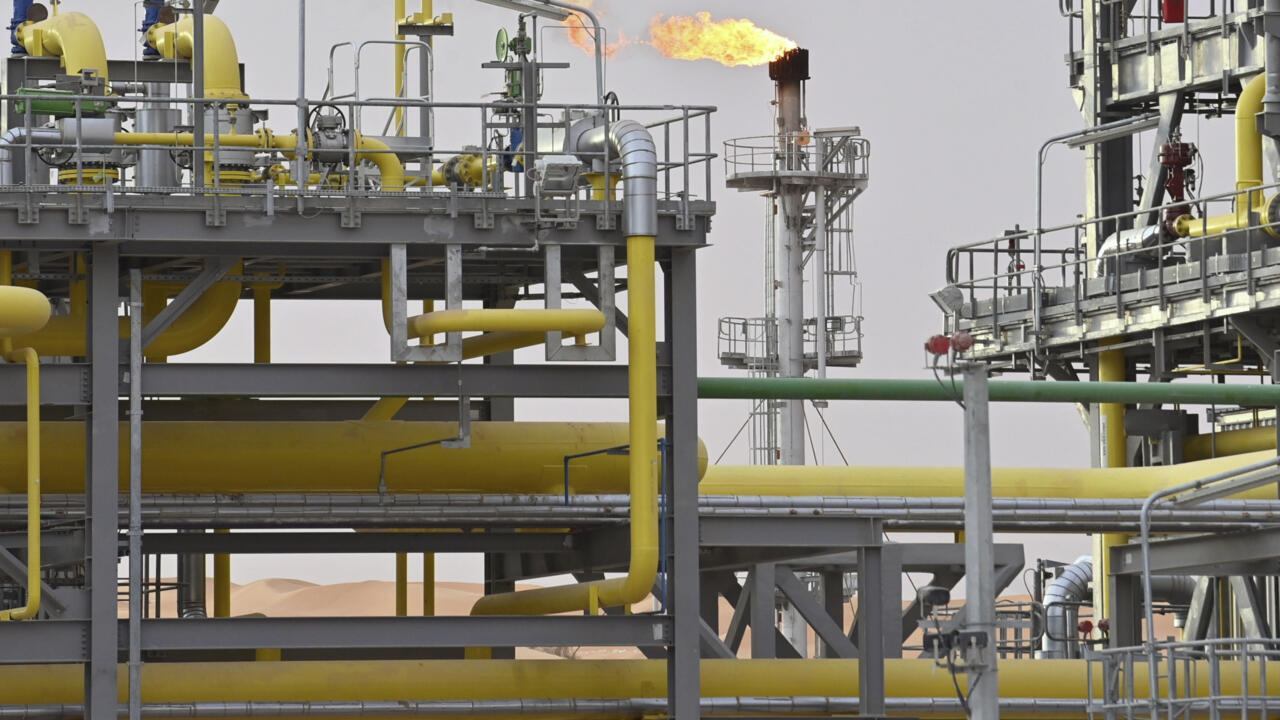
Algeria announced on Thursday the launch of the works for its section of the "Trans-Saharan Gas Pipeline" project, which extends over 4,000 kilometers to transport Nigerian gas to Europe via Niger. This announcement was made during an official ceremony in the Ouled Djellal area of Adrar province, overseen by Algerian Minister of Energy Mohamed Arkab, Nigerian Minister of State for Petroleum Resources Ibe Kachikwu, and Niger's Minister of Petroleum Mahamane Sani Mahamadou.
The pipeline is expected to transport between 20 and 30 billion cubic meters of natural gas annually from Nigeria through Niger to Algeria, and then to regional and international markets. Additionally, gas can be exported to the European Union via the Transmed pipeline to Italy or through the Medgas pipeline to Spain, or even converted into liquefied natural gas for shipment by vessels.
Details of the Event
The three ministers confirmed that this project reflects the shared political will of the leaders of Algeria, Niger, and Nigeria to establish a model African energy partnership. They noted that moving to the implementation phase is a critical step in realizing one of the largest energy projects on the African continent.
Last year, the three countries signed contracts in Algeria related to updating the feasibility study and compensation, in addition to a non-disclosure agreement. The ministers also approved the final report of the feasibility study prepared by the British consultancy firm Penspen.
Background & Context
In July 2022, a memorandum of understanding was signed between Algeria, Nigeria, and Niger to build a gas pipeline spanning 4,128 kilometers across the Sahara Desert. The project's cost was estimated at around $10 billion when the idea was launched in 2009.
Algeria is a key gas supplier to the European Union, contributing about 12% of its needs, amid rising international demand for gas and oil and increasing prices following the Russian invasion of Ukraine in February 2022.
Impact & Consequences
This project represents a strategic step to enhance energy cooperation among African countries and underscores the importance of Nigerian gas in meeting European market needs. It also reinforces Algeria's role as a major energy supplier in the region, which may contribute to improving economic and political relations among African nations.
The project is expected to create new job opportunities and boost economic development in the affected areas, thereby improving the living standards of local populations.
Regional Significance
This project serves as a model for Arab-African cooperation in the energy sector, potentially opening new avenues for collaboration between Arab and African countries in various fields. It highlights the importance of jointly utilizing natural resources to promote sustainable development in the region.
In conclusion, the Trans-Saharan Gas Pipeline project is a significant step toward achieving energy integration in Africa, reflecting the strong political will of the three countries to enhance cooperation and partnership.