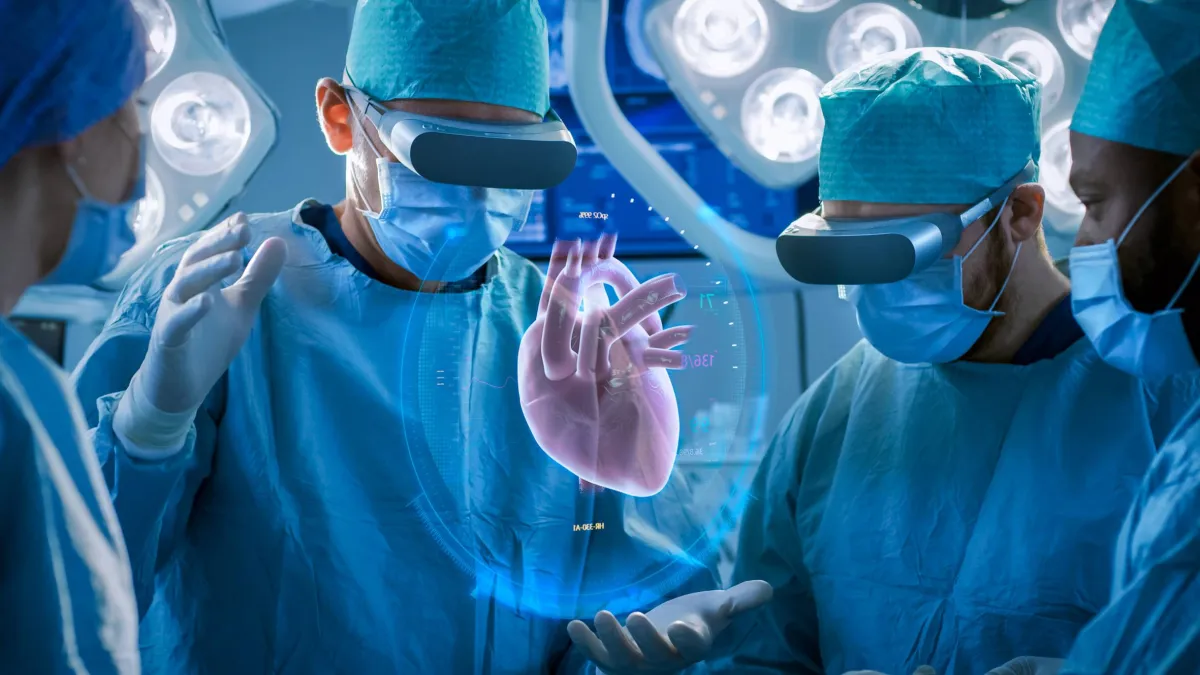
Artificial intelligence (AI) has become a pivotal element in the healthcare sector, moving beyond merely supporting physicians to becoming a partner in medical decision-making. By 2026, this sector is expected to transition into a more mature phase, where integrated data will serve as the foundation for innovation and healthcare delivery.
This transformation does not rely on a single technology; rather, it results from the convergence of multiple trends, including data integration, the evolution of analytical models, and the use of AI in daily operations. Additionally, the emergence of new regulatory environments allows for the experimentation of these technologies without compromising existing standards.
Event Details
One of the most significant changes in the sector is how health data is managed. Instead of relying on separate sources, the healthcare system is moving towards integrating multiple streams, including genomics, medical imaging, clinical records, and data generated from wearable devices. This integration aims to provide a deeper understanding of each patient's health status.
As this integration increases, data engineering becomes a critical factor in the success of analysis, as it is not merely a technical step but represents the foundation for accurate medical decisions. At the same time, the role of AI is expanding to become a decision-making partner, where AI-supported clinical decision support systems offer more personalized treatment recommendations.
Background & Context
These systems contribute to improving diagnostic accuracy, but they do not aim to replace physicians; rather, they seek to redistribute roles. Intelligent systems highlight risks and present options, while the final decision remains in human hands. This balance between automation and human judgment is one of the hallmarks of the current phase in healthcare evolution.
Moreover, healthcare is witnessing a gradual shift from institutions to home care, where continuous patient monitoring has become possible, especially in chronic disease cases, thanks to the increasing use of Internet of Things (IoT) devices and remote monitoring technologies. These new models not only aim to reduce costs but also seek to enhance health outcomes through early intervention.
Impact & Consequences
Simultaneously, regulatory bodies have begun to play a more flexible role in supporting innovation, with experimental environments emerging that allow for testing AI models using synthetic or simulated data. This approach reflects a shift in how the sector is regulated, moving from a model that relies solely on prior approval to one that balances experimentation with oversight.
At the scientific research level, new technologies such as quantum machine learning are emerging, which are used to improve the prediction of drug safety in early stages, potentially reducing failure rates in preclinical trials. AI also contributes to accelerating drug discovery, thereby reducing time and costs in the early stages of research.
Regional Significance
In the Arab region, this transformation could enhance the quality of healthcare and provide more personalized medical services, thereby strengthening health systems' ability to tackle various challenges. However, this must be done with consideration for privacy and information security issues to ensure that benefits are achieved without exposing the system to new risks.
In conclusion, it appears that the healthcare sector is undergoing a gradual transformation that is rebuilding its foundations, as the system moves towards prevention and prediction, supported by integrated data and advanced analytical models. In this model, data becomes a tool for forecasting the future, while artificial intelligence represents an extension of human capabilities.