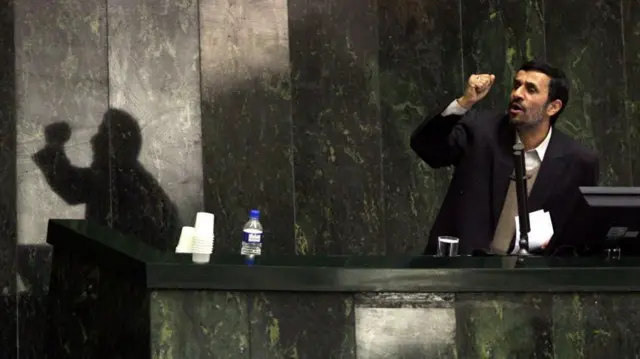
Mahmoud Ahmadinejad, the former Iranian president, has undergone significant political transformations, shifting from a symbol of confrontation with the West to a figure who may play a role in the post-Khamenei era. These changes reflect deep shifts in Iranian politics.
Ahmadinejad, who served as president from 2005 to 2013, was known for his hardline stances against the West, characterized by controversial statements regarding Iran's nuclear program and his relationships with Western nations. However, his political career has not been without challenges, as he faced internal criticism and disputes with the ruling system.
Details of the Event
Despite being repeatedly excluded from elections, Ahmadinejad still enjoys popularity among certain segments of the Iranian population. In recent years, he has begun to re-emerge on the political scene, raising questions about the possibility of his return as a potential option in the post-Khamenei phase. This shift comes at a time when Iran is experiencing significant political and economic changes, complicating the political landscape.
Ahmadinejad's return coincides with increasing internal and external pressures on the Iranian regime, which may open the door for new figures to assume leadership in the future. Additionally, some believe that his return could reflect a desire among certain factions within the regime to reconsider their strategies towards the West.
Background & Context
Historically, Ahmadinejad represented the hardline wing of Iranian politics, with his presidency marked by heightened tensions with the West, particularly during his time in office. However, the years following his departure from the presidency have seen significant changes in the Iranian political landscape, including the emergence of new powers and shifts in political discourse.
The post-Ahmadinejad period is sensitive, as the Iranian regime faces substantial economic and social challenges. These conditions may contribute to reshaping the political forces in the country, potentially allowing figures like Ahmadinejad to return to the forefront.
Impact & Consequences
If Ahmadinejad manages to return to the political arena, it could significantly impact Iranian-Western relations. This may lead to a resurgence of tensions or open the door for new dialogue between Iran and the West, depending on how various political forces within Iran respond.
His return could also affect the internal situation in Iran, potentially sparking new divisions among political factions. These dynamics could lead to changes in domestic and foreign policies, necessitating close monitoring by international observers.
Regional Significance
Ahmadinejad's transformations are particularly significant for the Arab region, as any change in Iranian policy could affect relations with Arab countries. His return might escalate tensions with certain nations or pave the way for new dialogues regarding regional issues.
Given the current circumstances, it is crucial for Arab nations to monitor developments in Iran, as any changes could impact regional stability. Understanding the political dynamics in Iran can help shape the foreign policy strategies of Arab countries.
In conclusion, the transformations in Ahmadinejad's career indicate the potential for significant changes in Iranian politics, warranting close attention from observers and analysts. These shifts may mark the beginning of a new phase in Iran's history and could have a profound impact on the region.