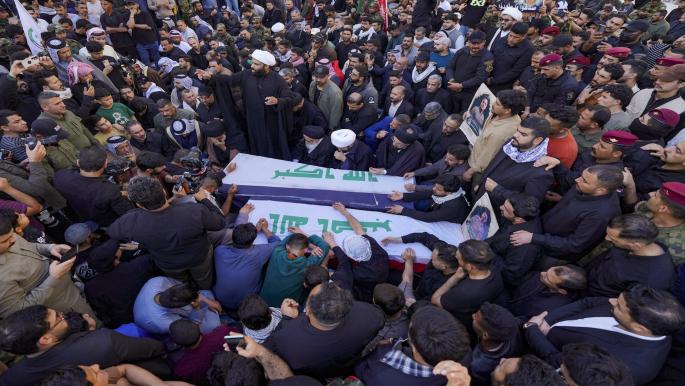
Reports indicate a systematic trend to transform Iraq's Popular Mobilization Forces into a model similar to Iran's Revolutionary Guard, where this model is funded by the Iraqi state and ideologically linked to an external center. This transformation raises many questions about its impact on the political and security scene in Iraq and the region.
The Popular Mobilization Forces, formed in 2014 to confront the ISIS threat, have become a prominent military and political force in Iraq. However, recent shifts suggest efforts to transform it into a more organized and cohesive entity, similar to the Revolutionary Guard, which is considered one of the most significant military forces in Iran and plays a major role in regional politics.
Details of the Event
These efforts include strengthening the organizational structure of the Popular Mobilization Forces and expanding its influence, which could lead to an increase in its impact on political decision-making in Iraq. There are also indications that some factions within the Popular Mobilization Forces are seeking to adopt strategies similar to those followed by the Revolutionary Guard, including enhancing military activities beyond Iraqi borders.
This trend comes at a time when Iraq is facing significant political and security challenges, with rising concerns about external influences on the internal situation. Some observers have pointed out that this model could lead to further divisions within Iraqi society, especially among different political factions.
Background & Context
The Popular Mobilization Forces were established in 2014 in response to the threat posed by ISIS, achieving significant successes in reclaiming Iraqi territories. However, the ties of some of its factions to Iran have sparked widespread debate about its independence. In recent years, pressure has increased on the Popular Mobilization Forces to expand its role, leading to calls for adopting the Revolutionary Guard model.
The Iranian Revolutionary Guard, established after the Islamic Revolution in 1979, is considered one of the most prominent military institutions in Iran and plays a significant role in supporting armed groups in the region. This model may be appealing to some factions within the Popular Mobilization Forces, especially amid rising regional tensions.
Impact & Consequences
If this transformation occurs, it could lead to radical changes in the political and security landscape in Iraq. Strengthening the role of the Popular Mobilization Forces could exacerbate tensions among various political factions and increase sectarian divisions in the country. Additionally, this model may raise concerns among neighboring countries, particularly those wary of increased Iranian influence in the region.
Furthermore, enhancing the role of the Popular Mobilization Forces could affect Iraq's relations with the United States and Western countries, which may view this transformation as a threat to their interests in the region. This could lead to increased pressure on the Iraqi government to limit the influence of the Popular Mobilization Forces.
Regional Significance
This transformation within the Popular Mobilization Forces could have wide-ranging implications for the Arab region. Increased Iranian influence through support for the Popular Mobilization Forces could escalate tensions in countries like Saudi Arabia, Syria, and Lebanon. Moreover, this model could encourage other armed groups in the region to adopt similar strategies, complicating security situations further.
In conclusion, the potential transformation of the Popular Mobilization Forces into a model akin to the Iranian Revolutionary Guard poses a significant challenge for Iraq and the region as a whole. It requires close monitoring of developments in this situation, as the impacts may extend beyond Iraqi borders.