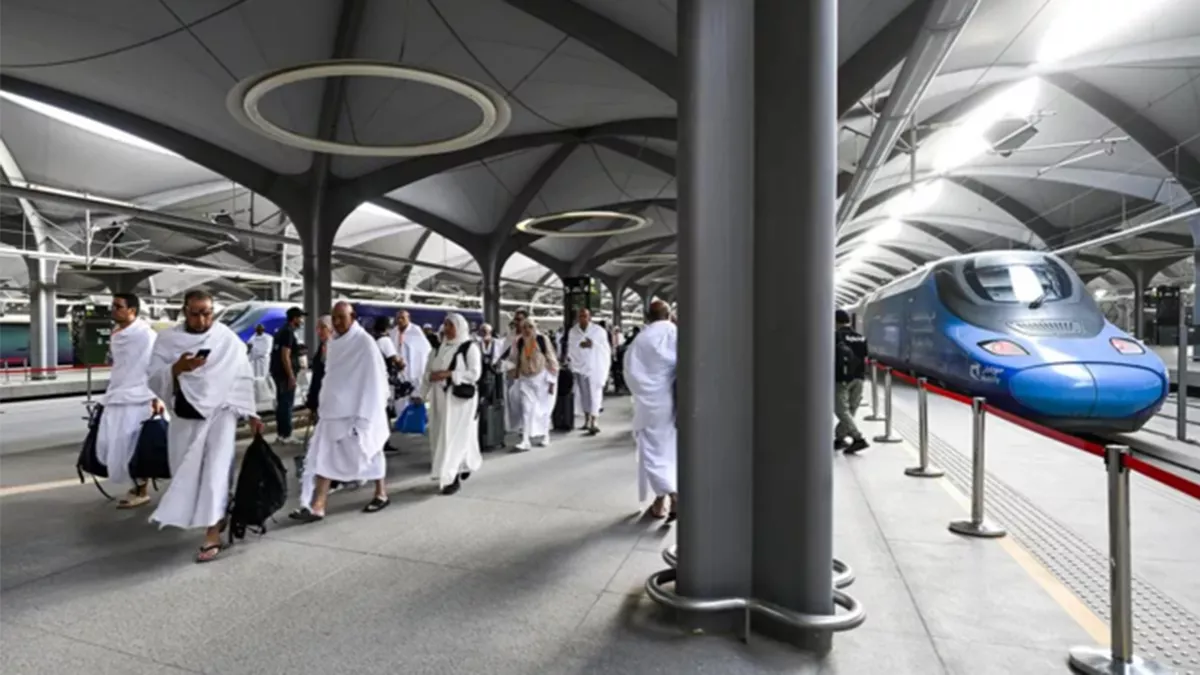
Saudi Railways successfully transported 357,000 pilgrims using the Sacred Sites Train during its fourth operation, reflecting efforts to facilitate pilgrim movement during the Hajj season. This initiative aims to enhance the services provided to pilgrims and ease their experience.
The Sacred Sites Train services are among the most significant projects implemented in the Kingdom of Saudi Arabia, contributing to reducing congestion and saving time and effort for pilgrims. Reports indicate that the train has witnessed a substantial influx of pilgrims, showcasing its success in achieving the desired objectives.
Details of the Operation
The transportation of pilgrims via the train commenced at the beginning of the Hajj season, with trains equipped with the latest technologies to ensure the safety and comfort of pilgrims. A number of trains have been designated for transporting pilgrims between the sacred sites, facilitating their movement between Mina, Arafat, and Muzdalifah.
Saudi Railways continuously works to improve its services, increasing the number of trips and expanding the range of services offered. Additionally, staff have been trained on how to interact with pilgrims and meet their needs, enhancing the overall Hajj experience.
Background & Context
Historically, Saudi Arabia has witnessed significant efforts to develop the infrastructure for Hajj services, with numerous large-scale projects established to facilitate pilgrim movement. Among these projects is the Sacred Sites Train, launched to meet the growing needs of pilgrims.
This project is part of the Kingdom's Vision 2030, which aims to improve the quality of life and develop services provided to pilgrims. These projects have contributed to enhancing the Kingdom's status as a primary destination for Hajj and Umrah.
Impact & Consequences
The Sacred Sites Train services represent a positive step towards improving the Hajj experience, contributing to reduced congestion and saving time for pilgrims. Furthermore, these services reflect the Kingdom's commitment to providing the best services to the guests of Allah.
These services are expected to enhance religious tourism in the Kingdom, benefiting the local economy and bolstering the Kingdom's position on the international stage.
Regional Significance
The Kingdom's experience in developing Hajj services serves as a model for other Arab countries. Countries that receive pilgrims can benefit from this experience to improve their services and develop their infrastructure.
Moreover, enhancing Hajj services contributes to strengthening cultural and religious ties between Arab nations, fostering cooperation and understanding among peoples.
In conclusion, Saudi Railways' efforts in transporting pilgrims via the Sacred Sites Train reflect the Kingdom's commitment to providing the best services to the guests of Allah, enhancing the Hajj experience and showcasing the ongoing development of the Kingdom's infrastructure.