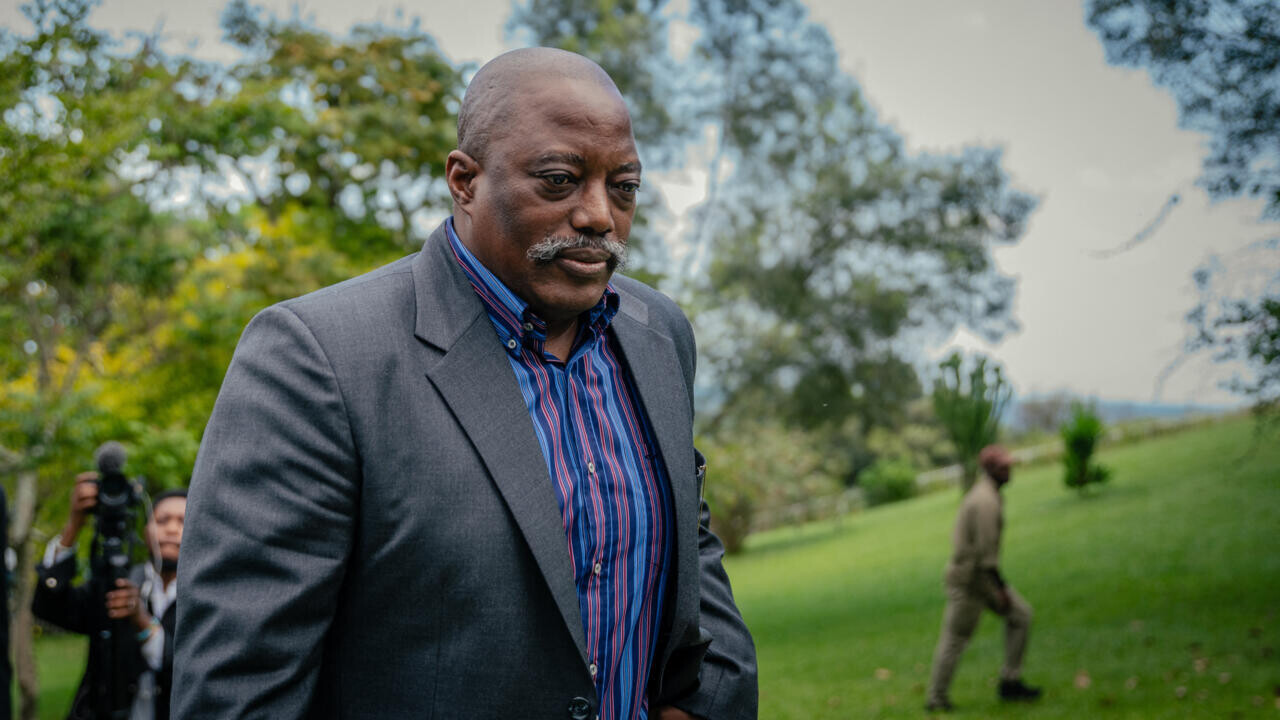
Joseph Kabila, the former president of the Democratic Republic of Congo, is living in a state of anxiety and fear after the government issued a ruling convicting him of treason, which threatens his life with a death penalty. This case comes at a sensitive time for the country, which is suffering from increasing political and economic crises.
The events of this case date back to last year when the government accused Kabila of being involved in conspiracies aimed at destabilizing the current regime. However, Kabila insists that these charges are fabricated and views them as part of a political campaign against him aimed at excluding him from the political arena.
Details of the Case
In 2022, the Supreme Court of the Democratic Republic of Congo issued a ruling convicting Kabila, which sparked mixed reactions both domestically and internationally. Several of his close associates were arrested as part of the investigations, complicating the situation further. Kabila, who led the country for 18 years, is considered a pivotal figure in Congolese politics and faced widespread criticism during his rule for issues related to corruption and human rights.
Concerns are growing that this ruling could escalate political tensions in the country, as the current regime faces significant challenges in maintaining stability. This situation reflects the deep divisions within Congolese society, where opinions about Kabila and his role in the country’s history vary widely.
Background & Context
The history of the Democratic Republic of Congo is filled with political and economic conflicts, having witnessed numerous changes in leadership. Kabila assumed power after the assassination of his father, Laurent Kabila, in 2001, and remained in power until 2019. During his tenure, the country faced numerous crises, including civil wars and armed conflicts.
After leaving office, Kabila attempted to maintain his influence by supporting certain political figures, but the current government views him as a threat to its stability. The ruling against him reflects the changing political dynamics in the country, as the current regime seeks to consolidate its power by eliminating opponents.
Impact & Consequences
The Kabila case is seen as an indicator of increasing political tensions in the Democratic Republic of Congo and may lead to an escalation of popular protests. If the situation continues as it is, instability may increase, negatively impacting the national economy. Additionally, this case could affect the country’s international relations, as pressures from the international community on the government to ensure human rights are mounting.
Moreover, these events may exacerbate divisions within Congolese society, as opinions about Kabila and his role in the country’s history differ significantly. Many view his trial as part of a power struggle among various political factions.
Regional Significance
The Kabila case holds importance for the Arab region, reflecting the challenges faced by political systems in maintaining stability. Amid the political and economic crises affecting many Arab countries, Kabila's experience could serve as a lesson in handling political opposition.
Furthermore, the situation in the Democratic Republic of Congo may impact Arab investments in the region, as fears of political instability grow. Therefore, monitoring the developments of this case will be crucial for investors and decision-makers in the Arab world.