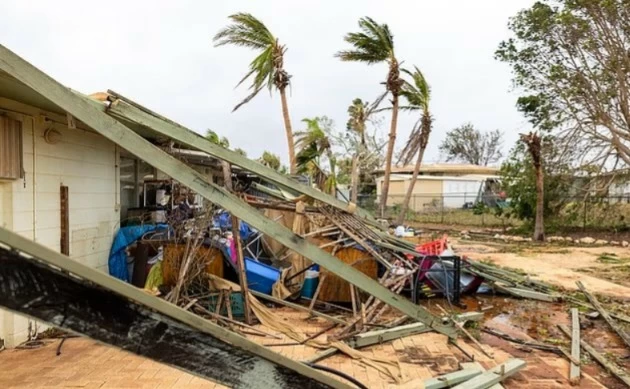
Tropical Cyclone Narelle has struck northwest Australia, leaving devastating effects along the west coast, with its classification downgraded to a tropical low on Saturday morning. The town of Exmouth, located about 1,250 kilometers north of Perth, suffered the most damage, with wind speeds exceeding 250 kilometers per hour.
Residents reported that the destruction was extensive, with winds tearing off building roofs, power outages occurring, and many homes being flooded. Approximately 50 people were evacuated from a local shelter after it sustained roof damage due to the fierce winds.
Details of the Event
Craig Kitson, a resident of Exmouth, told the Australian Associated Press (AAP), "The destruction follows you everywhere you look. The town has changed drastically." The small town, home to a few thousand residents, faced the strongest blow from the category four cyclone on Friday. Kitson noted that some homes were completely destroyed, leading to a drastic change in the lives of many.
By Saturday morning, thousands of homes and businesses remained without power in Exmouth and Carnarvon, while emergency services received requests for assistance from around 40 people in the Pilbara region, including 29 in Exmouth. Cyclone Narelle moved south towards Coral Bay, making landfall on Friday evening before gradually weakening.
Background & Context
Cyclone Narelle is considered one of the worst cyclones to hit the region in recent years. Compared to the category five cyclone that struck the area in 1999, residents feel that Narelle was more severe due to its length and direct path towards the town, despite improvements in modern building standards.
Wind gusts exceeding 120 kilometers per hour were recorded in parts of the Gascoyne region, accompanied by rainfall of 100 millimeters, increasing the risk of flash flooding and road closures. Although the cyclone's intensity has diminished, the atmospheric system remains associated with strong winds and heavy rain, prompting ongoing warnings for residents in several areas.
Impact & Consequences
Local authorities continue efforts to assess the damage caused by the cyclone, with many areas still experiencing power outages. Warnings have been issued to monitor flood risks extending from Exmouth to the Swan River in Perth.
The cyclone is expected to gradually lose strength as it moves inland, but it continues to generate strong winds and heavy rainfall. The Bureau of Meteorology is closely monitoring the situation, with expectations that the cyclone will move southeast before reaching the Southern Ocean on Saturday evening.
Regional Significance
These events highlight the challenges faced by countries in dealing with natural disasters, necessitating enhanced preparedness and infrastructure to cope with such phenomena. They also underscore the importance of international cooperation in humanitarian relief and support for affected nations.
In conclusion, Cyclone Narelle serves as another example of nature's power and its ability to cause widespread destruction, prompting all nations to take necessary measures to protect their citizens.