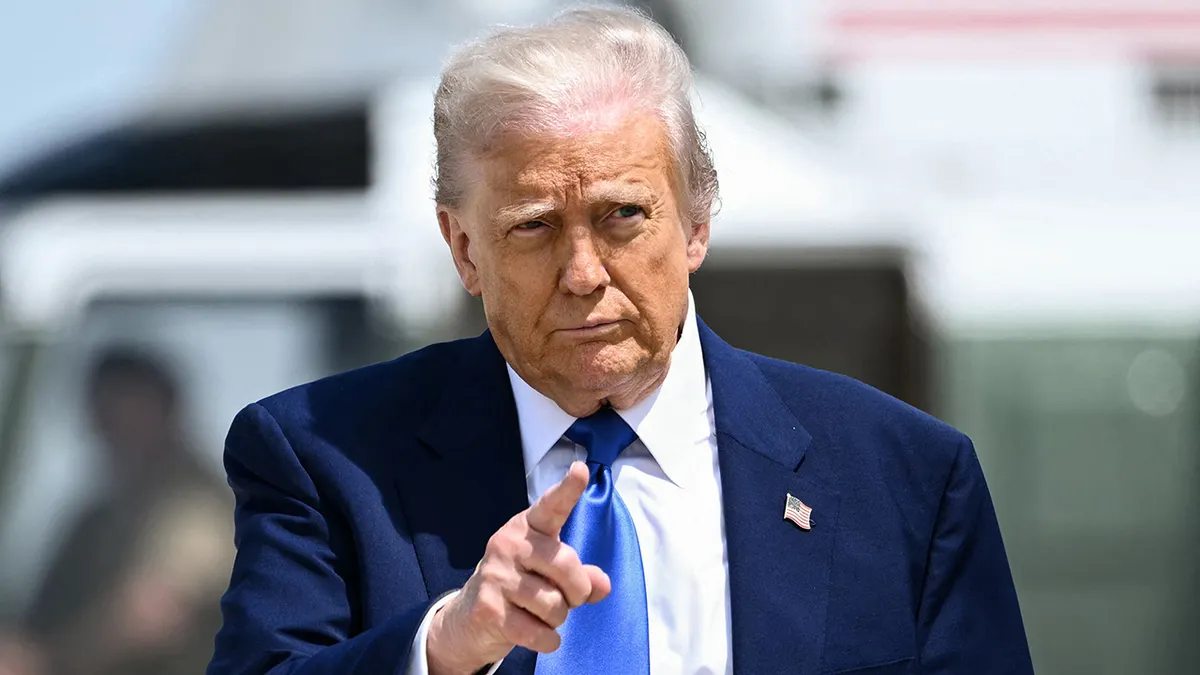
US President Donald Trump announced that American troops will leave Iran within a period of two to three weeks, a move that is seen as the end of military operations targeting the country. This announcement was made during a press conference held on Tuesday, where Trump stated, "All I have to do is leave Iran, and we will do that soon."
Trump added that "we will leave soon, perhaps in two or three weeks," indicating that other countries like France could exploit Iran's oil and gas resources, but they would be responsible for their own security. He assured that the situation in the Strait of Hormuz would be safe, without any role for the United States in that regard.
Details of the Event
Reports indicate that the United States and Israel have carried out a series of airstrikes on Iran since February 28, resulting in the deaths of more than 1,340 people according to the Iranian government. Iran responded to these attacks by launching drone strikes and missiles against Israel and US military sites in Gulf countries.
Official US data indicates that 13 American soldiers have died since the beginning of the conflict, which has also led to rising energy prices and disrupted shipping in the Strait of Hormuz, a vital corridor for global oil trade.
Context and Background
Trump's statements coincide with escalating tensions between the United States and Iran, where there have been repeated attempts by the US administration to curb Iran's influence in the region. This has manifested in targeting Iranian military facilities, in addition to imposing strict economic sanctions.
Historically, relations between the United States and Iran have seen increasing tensions since the Islamic Revolution in 1979, which severed diplomatic ties between the two countries. Since then, there have been several attempts at negotiations, but they have often failed.
Implications and Impact
The withdrawal of US troops from Iran carries significant implications for the regional landscape. This move could be seen as a victory for Iran, potentially strengthening its position in the region and increasing its influence. Additionally, this withdrawal may encourage Iran-backed groups in Iraq and Syria to enhance their activities.
Furthermore, this step could exacerbate security conditions in the Gulf, as extremist groups might exploit the security vacuum resulting from the US withdrawal. There are also concerns that this could escalate the conflict in the region, especially amid ongoing tensions between Iran and Israel.
Impact on the Arab Region
For Arab countries, the withdrawal of US troops from Iran may have direct effects on regional security. Gulf states, which rely on US support to counter Iranian threats, may find themselves in a difficult position. This withdrawal could also encourage Iran to expand its influence in Iraq, Syria, and Lebanon, increasing tensions in the region.
In conclusion, the question remains as to how Arab countries will respond to this development. Will they strengthen their regional alliances to face new challenges? Or will they remain in a position of waiting and watching?