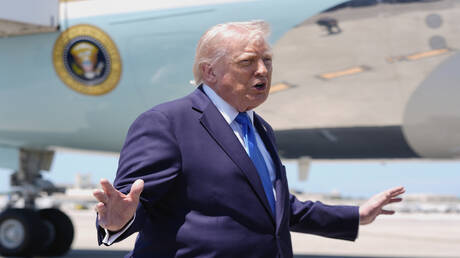
In an interview with Fox News, U.S. President Donald Trump stated that the war with Iran will conclude very soon, emphasizing that the United States will emerge victorious from this confrontation. His remarks come amid rising tensions between Washington and Tehran, raising questions about the future of their relations.
Trump, discussing the current situation in the Middle East, expressed hope that the United States would not have to take military action against what remains of the Iranian regime. These statements reflect the current U.S. administration's policy towards Iran, which includes pressuring the Iranian regime through economic sanctions and military threats.
Details of the Event
Trump's statements came at a sensitive time, as fears of a potential military escalation in the region are increasing. The war with Iran has been a hot topic for years, especially following the U.S. withdrawal from the nuclear agreement in 2018. Since then, relations between the two countries have significantly deteriorated, with accusations and threats exchanged.
While Trump did not specify a precise timeline for the end of the war, he affirmed that the United States would remain committed to achieving its objectives in the region. These statements are part of the U.S. administration's efforts to reassure its allies in the Middle East, who are concerned about the rising Iranian influence in the region.
Background & Context
Historically, U.S.-Iran relations have been tense since the Islamic Revolution in 1979. The economic sanctions imposed by the United States on Iran have significantly impacted the Iranian economy, exacerbating internal conditions in the country. In recent years, tensions have escalated due to Iranian military activities in Iraq and Syria, and its support for armed militias that threaten regional stability.
In this context, Trump's statements are part of a larger strategy aimed at containing Iranian influence and preventing any military escalation that could lead to a widespread conflict in the region. The U.S. administration hopes that economic pressures will lead to a change in the behavior of the Iranian regime without the need for direct military intervention.
Impact & Consequences
Trump's recent statements could affect international relations, potentially reshaping alliances in the region. U.S.-allied Arab countries may feel concerned about any military escalation, prompting them to reassess their security strategies. On the other hand, these statements might encourage Iran to continue its aggressive policies, increasing the likelihood of new conflicts.
Additionally, these remarks could impact global markets, particularly oil markets, as any escalation in the region could lead to a significant rise in oil prices. Investors in financial markets are closely monitoring the situation, as any changes in U.S. policy towards Iran could affect market stability.
Regional Significance
For Arab countries, U.S. statements reflect the ongoing challenges they face in countering Iranian influence. Many nations, such as Saudi Arabia and the UAE, are concerned about Iranian expansion in the region, prompting them to strengthen their alliances with the United States. These dynamics could lead to further tensions in relations between Arab states and Iran, increasing the risk of armed conflicts.
In conclusion, Trump's statements regarding the war with Iran remain a focal point of significant interest, reflecting the complex challenges facing U.S. policy in the Middle East. As tensions continue, the question remains about how to achieve stability in the region without resorting to military escalation.