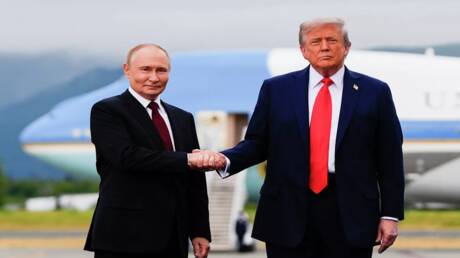
In a series of provocative statements, U.S. President Donald Trump asserted that Russian President Vladimir Putin does not fear NATO, describing it as a 'paper tiger' that lacks the actual military capabilities to pose a real threat. These comments emerge at a time when tensions between Russia and Western nations are escalating, prompting inquiries into NATO's effectiveness in confronting global security challenges.
These remarks are part of Trump's foreign policy, which emphasizes reducing reliance on traditional allies as he seeks to reassess the United States' role in international affairs. The opinions expressed have sparked mixed reactions among politicians and analysts, with some arguing that Trump is undermining military alliances that are fundamental to European security.
Details of the Statement
During a press conference, Trump stated that Putin recognizes NATO's inability to effectively confront military challenges, reflecting his view on the military strength of the United States and its allies. He noted that this situation grants Russia greater freedom in making military decisions without fear of strong reactions from NATO.
These statements come at a sensitive time, as NATO faces multiple challenges, including tensions in Ukraine and threats from the Middle East. Trump's characterization of NATO as a 'paper tiger' indicates a lack of confidence in the alliance's ability to address increasing threats.
Background & Context
NATO was established in 1949 as a military alliance aimed at enhancing collective security among member states. However, the alliance has faced significant challenges in recent years, including conflicts in Ukraine and Syria. This has led to increasing calls within member countries to bolster military capabilities and defense cooperation.
In recent years, criticism of NATO has escalated from some political leaders, including Trump, who have called for a reassessment of U.S. military commitments to the alliance. This trend could impact relations between the United States and its allies, raising concerns about the stability of European security.
Impact & Consequences
Trump's statements suggest a potential shift in U.S. policy towards NATO, which may lead to a reassessment of defense strategies among member states. If these trends continue, it could undermine trust among allies, weakening NATO's ability to confront common threats.
Moreover, these remarks may encourage Russia to take bolder steps in its foreign policy, increasing tensions in conflict areas such as Ukraine. Many view these dynamics as potentially leading to an escalation of military conflicts in the future.
Regional Significance
The Arab region is indirectly affected by these developments, as any escalation in tensions between NATO and Russia could impact regional stability. Additionally, changes in U.S. policy may influence military and economic support for Arab nations, prompting them to reassess their security strategies.
Under these circumstances, Arab countries must closely monitor developments, especially amid ongoing tensions in the Middle East. Shifts in international alliances could have significant implications for regional security.