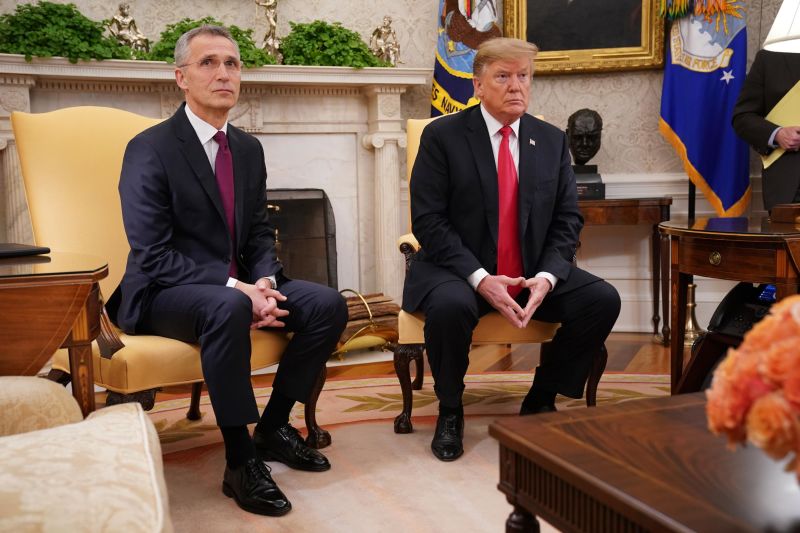
In an interview with the British newspaper Daily Telegraph, U.S. President Donald Trump disclosed that he is seriously considering withdrawing from NATO, pointing to the lack of support from allies in U.S. military operations against Iran. Trump described the alliance as a "paper tiger", reflecting his dissatisfaction with member countries' commitments to their responsibilities towards the United States.
Trump's remarks come at a sensitive time, as tensions in the Middle East are escalating, particularly with the increase in Iranian military activities. The U.S. President indicated that the lack of support from allies in these circumstances could influence his future decisions regarding military alliances.
Details of the Event
During the interview, Trump expressed disappointment over the lack of participation from allies in military operations against Iran, which has led him to contemplate the possibility of a U.S. withdrawal from the alliance. He clarified that this decision would not be easy, but he considers it a viable option if the situation remains unchanged.
Trump also emphasized that NATO must be more effective in addressing global threats and that member countries need to increase their defense budgets to meet the alliance's needs. He warned that failing to do so could erode trust among members.
Background & Context
NATO was established in 1949 as a defensive alliance aimed at countering military threats in Europe. Over time, the alliance's role has evolved to encompass a range of global security issues, including counter-terrorism and intervention in regional conflicts.
However, recent years have witnessed a divergence in approaches among member states, with Trump repeatedly criticizing the lack of contributions from certain countries to the alliance's defense budget. These criticisms have strained relations between the United States and its allies, intensifying discussions about the future of NATO.
Impact & Consequences
If the United States decides to withdraw from NATO, it would have significant implications for the global security framework. This decision could undermine trust among member states and may open the door for increased regional conflicts.
Moreover, a U.S. withdrawal could encourage other countries to reassess their alliances, potentially leading to drastic changes in military and political balances worldwide. This situation could negatively impact European security and heighten tensions with Russia.
Regional Significance
In the Arab context, a U.S. withdrawal from NATO could escalate tensions in the Middle East, especially with the rising Iranian activities. Arab countries may find themselves in a difficult position, needing to reassess their security and defense strategies in the absence of U.S. support.
This development could also pave the way for other regional powers to enhance their influence in the area, potentially leading to further conflicts and disputes. Therefore, Arab nations need to strengthen their security cooperation to address the growing challenges.
In conclusion, the issue of the United States withdrawing from NATO remains a contentious topic, as concerns grow over the implications of this decision on global and regional security. While Trump may be considering this option, the potential consequences could be far-reaching.