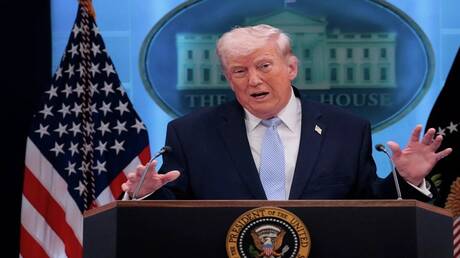
U.S. President Donald Trump, in his recent statements, emphasized that NATO's failure to provide support to the United States in its struggle with Iran would negatively impact the alliance's reputation. He regarded this refusal as an indelible stain, reflecting the increasing tensions in international relations.
Trump's remarks came during a press conference held on Monday, where he pointed out that the United States expects its NATO allies to stand by it in the face of Iranian threats. He argued that a lack of necessary support would lead to a deterioration of trust among member states of the alliance.
NATO's Role in Current Tensions
These statements come at a time when the region is witnessing an escalation of tensions between the United States and Iran, with growing fears of a potential military escalation. Trump, who has often criticized his NATO allies for not contributing enough to the defense budget, seems to be using this opportunity to highlight the importance of solidarity among member states.
He also indicated that the United States might take unilateral steps if the refusal from its allies continues, complicating the security situation in the region. These comments have elicited mixed reactions from NATO member countries, with some calling for enhanced security cooperation.
Background & Context
Historically, NATO has faced numerous challenges since its establishment in 1949 as a military alliance to counter Soviet threats. Over time, the alliance's role has evolved to encompass a range of global security issues, including counter-terrorism and regional crises.
In recent years, pressure has mounted on NATO to provide an effective response to new challenges, including threats from countries like Iran. However, divisions among member states regarding how to address these threats remain, raising concerns about the future of the alliance.
Impact & Consequences
If NATO continues to fail in providing support to the United States, it could exacerbate conditions in the Middle East. The U.S. may find itself compelled to take unilateral military action, increasing the likelihood of escalation in the conflict.
Moreover, this situation could affect relations between the United States and its allies, as some may feel unbound by their commitments to the alliance. This could open the door for other countries like Russia and China to enhance their influence in the region.
Regional Significance
For Arab countries, the rising tensions between the United States and Iran could have direct implications for security and stability. Any military actions by the U.S. could escalate the conflict in the region, negatively impacting neighboring countries.
Additionally, the lack of trust among NATO member states could lead to a decline in security cooperation in the region, increasing the challenges faced by Arab countries in addressing security threats.
In light of these complex circumstances, the question remains about how NATO will respond to new challenges and whether it will be able to maintain its unity in the face of increasing threats.