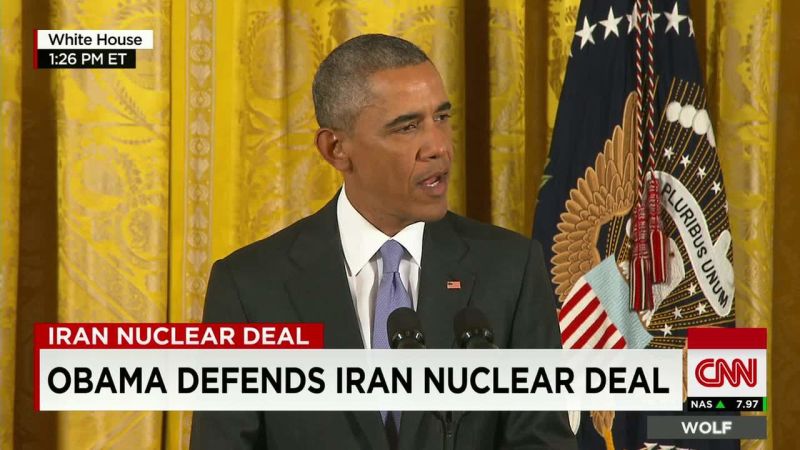
Former U.S. President Donald Trump criticized his predecessor Barack Obama, accusing him of paying $1.6 billion to the Iranian regime in an attempt to buy their loyalty. Trump emphasized that this money did not achieve the desired results, pointing out that Iran did not cease its hostile activities in the region.
Trump's remarks came during a campaign rally, where he reviewed what he considered a failure in U.S. foreign policy towards Iran. He noted that Obama hoped this payment would improve relations with Tehran, but he argued that the outcome was counterproductive.
Details of the Event
In his remarks, Trump added that the funds paid were part of a nuclear agreement reached in 2015, which aimed to reduce tensions between the United States and Iran. However, Trump considered this agreement weak and claimed it did not contribute to achieving peace in the region.
Trump also criticized the Obama administration for not taking stringent actions against Iran, pointing out that the Iranian regime continued to support armed groups in the Middle East, including Hezbollah and Iraqi militias.
Background & Context
The roots of tension between the United States and Iran date back decades, with relations between the two countries escalating after the Iranian Revolution in 1979. Since then, the United States has pursued a policy of pressure on Iran, especially regarding its nuclear program.
In 2015, a group of major powers reached an agreement with Iran aimed at limiting its nuclear program in exchange for easing economic sanctions. However, Trump withdrew from this agreement in 2018, leading to a resurgence of tensions.
Impact & Consequences
The implications of Trump's statements go beyond mere political criticism, reflecting a divide in U.S. policy towards Iran. While some believe that dialogue with Tehran is the only way to achieve peace, others argue that military and economic pressure is the optimal solution.
These statements also affect U.S. relations with its allies in the region, as some are seeking to enhance security cooperation with the United States to counter Iranian threats.
Regional Significance
Iran is considered a key player in regional conflicts, supporting various armed groups in Arab countries. Therefore, any changes in U.S. policy towards Iran could directly impact security and stability in the region.
At the same time, Arab countries are closely monitoring developments in U.S.-Iranian relations, hoping that any positive steps will lead to a reduction in tensions and achieve stability in the region.
In conclusion, Trump's statements regarding Obama and the Iranian regime remain part of the ongoing discussion about U.S. foreign policy. As tensions in the region escalate, the question of how to deal with Iran remains one of the major challenges facing the current U.S. administration.