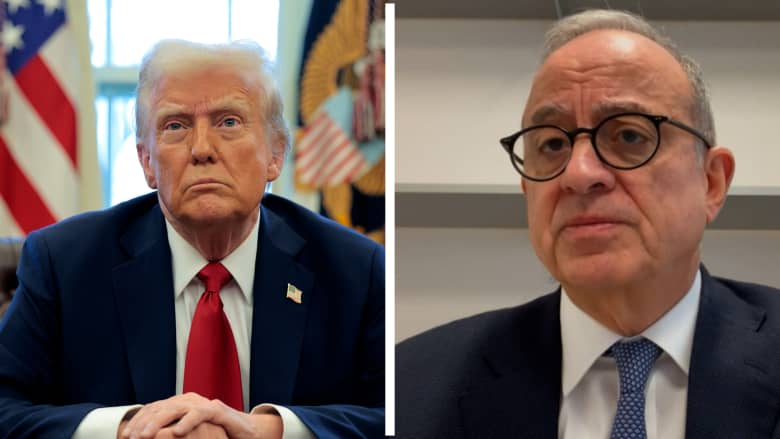
Former US President Donald Trump declared in a post on his Truth Social account that the Democratic Party has become the biggest enemy of the United States after what he described as the 'death of Iran'.
Trump, a member of the Republican Party, suggested that the radical left Democratic Party is incompetent, emphasizing its negative role in both domestic and foreign policy, reflecting the political polarization that the country is experiencing.
These remarks come at a time of significant escalation in US-Iran relations, with both Washington and Tel Aviv continuing their war on Iran for the third consecutive week. In new threats, Trump warned early Sunday of striking Iranian energy facilities if Iran does not reopen the Strait of Hormuz within 48 hours, a warning that reflects the seriousness of the US position.
On the other hand, Iran has vowed to respond harshly to any targeting by the US or Israel, threatening to target all energy infrastructure and information technology in both countries. These tensions underscore the underlying conflicts in the region, which are intensifying day by day.
Since February 28, Israel and the United States have reportedly launched what observers describe as aggression against Iran, leading to the deaths of several prominent figures, including Iranian Supreme Leader Ali Khamenei, along with other security officials. This aggression has resulted in massive destruction in Iranian infrastructure, while Tehran retaliates by launching missiles and drones towards Israel.
Additionally, the security situation in the region raises significant concern, as Iran carries out attacks on what it describes as US bases and interests in several Arab countries. Some of these attacks have resulted in human casualties and significant damage to civilian objects, prompting widespread condemnation from targeted nations demanding an end to these assaults.
Moreover, reports and analyses abound regarding the impact of military escalation between the United States and Iran on regional security. There are fears that these dynamics could escalate doubts and sectarian conflicts in areas such as Iraq, Syria, and Yemen, where armed factions linked to Iran are considered a significant factor in local conflicts.
In a broader context, Trump's remarks come at a very sensitive time in US politics, as many individuals seek to reshape the identity of the Republican Party amidst social and political changes, adding another dimension to the extreme polarization between the two parties, Republican and Democratic, which in turn reflects the societal divisions in the United States.
Trump's expression of his view on the Democratic Party and its relation to Iran reflects a new framing of political discourse in America, where national security and foreign policy issues are used as tools to reinforce internal political divisions and mobilize voters.
Ultimately, the question remains how events will unfold in the region, and what impact these statements will have on US policy towards Iran and other vital issues in the Middle East.