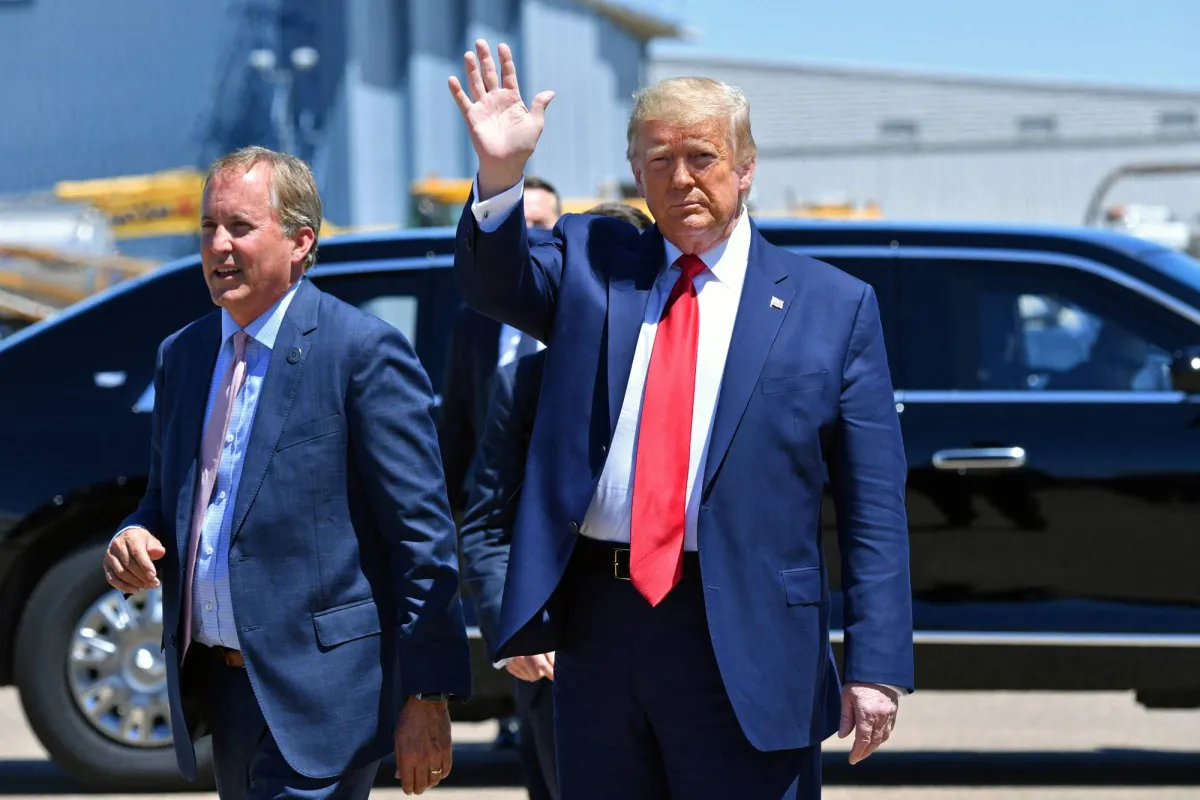
Republican candidates supported by former U.S. President Donald Trump are achieving consecutive victories in the primaries, having ousted critics from within the party. The latest casualty is Republican Senator John Cornyn, who lost his Senate seat in Texas to Ken Paxton, a Trump-backed candidate.
This development once again reflects Trump's dominance over the Republican Party and his ability to reshape its internal landscape. However, this situation raises concerns among Republican leaders who fear that Trump's victories could become a burden in the midterm elections. Some candidates loyal to Trump's base may struggle to attract independent voters, compared to seasoned figures like Cornyn, who has raised over $400 million for Republicans since entering the Senate.
Details of the Event
Republicans are cautiously eyeing the upcoming midterm elections, which will determine the fate of the majority in both the Senate and the House of Representatives, impacting the trajectory of the President's agenda during his remaining two years in the White House. Both the Democratic and Republican parties are racing to win over American voters amid a charged domestic atmosphere, characterized by rising partisan divisions and inflation due to global crises.
Despite Trump's focus on foreign issues, he is keen to influence the primaries and eliminate his opponents within the party, increasing Republicans' anxiety about their chances of retaining the majority. While the candidates chosen by Trump enjoy significant support from his grassroots base, they generate considerable controversy among independent voters.
Background & Context
Currently, Republicans hold a slim majority in the Senate, with 53 seats compared to 45 for Democrats and two independents. Not all members of the chamber are up for election every two years; rather, one-third of the members are defending their seats. This year, 35 seats will be contested, including 22 Republican seats and 13 Democratic seats.
Democrats need to secure 4 seats to win the majority, and although achieving this goal is challenging due to a significant number of Republican seats in safe states, current crises have given them hope of reaching their target. Attention is focused on states like Alaska, New Hampshire, and Georgia, where Democrats face significant challenges.
Impact & Consequences
In Alaska, where Trump won by a margin of 13 points in the 2024 elections, former Democratic Representative Mary Peltola is running against current Republican Senator Dan Sullivan. Although her chances are modest, the state's involvement in the Democrats' equation reflects the predicament faced by Republicans.
In Georgia, which turned blue in the 2020 Senate elections, Republicans are attempting to regain control of the state from Democratic Senator Jon Ossoff. In New Hampshire, where Democratic Senator Jeanne Shaheen has announced her retirement, Republicans are vying to seize the seat, and the final candidates will not be clear until September 8.
Regional Significance
The Arab region is indirectly affected by these developments, as political changes in the United States play a crucial role in shaping foreign policies, including relations with Arab countries. Additionally, the economic and political crises facing the United States may influence its strategies in the region.
In conclusion, the upcoming midterm elections remain a true test of Trump's strength within the Republican Party and the implications of that for the party's future in Congress.