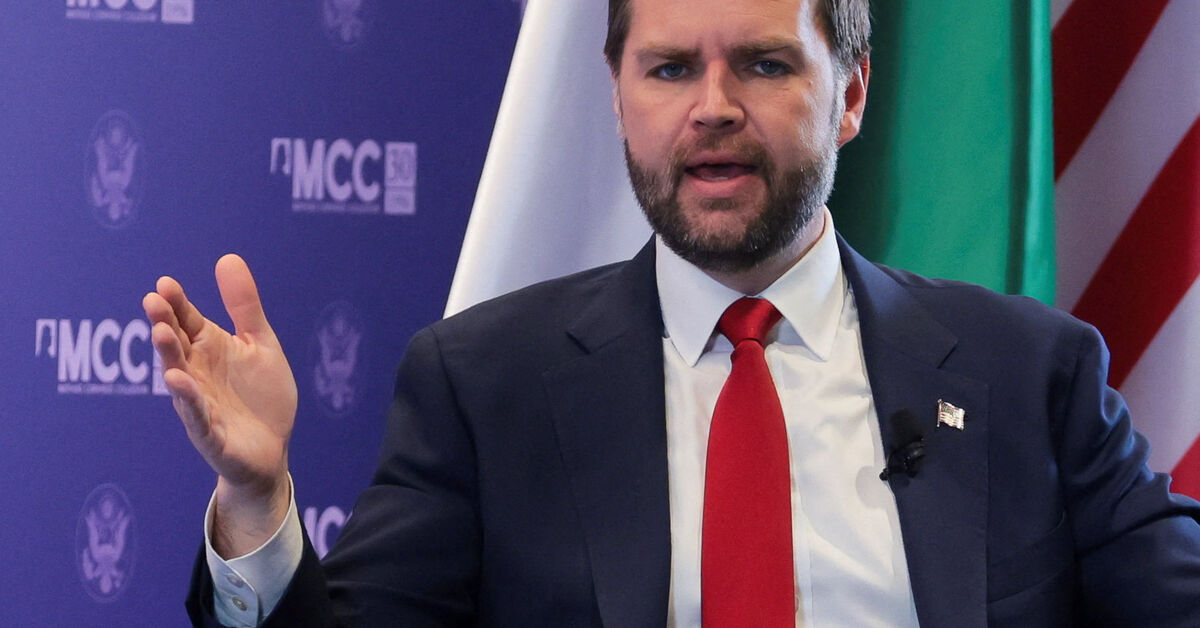
U.S. Vice President J.D. Vance expressed that President Donald Trump is feeling impatient about achieving progress in negotiations aimed at ending the war with Iran. This statement was made during an event held in Budapest, where Vance confirmed that Trump has directed his negotiating team to engage with the Iranians in good faith, reflecting the U.S. administration's desire to reach an agreement.
Vance noted that there is potential for an agreement if Iran shows seriousness in the negotiations. However, he warned that some factions within the Iranian regime are engaging constructively in talks, while others continue to refuse cooperation. He described the current situation as a "fragile truce," reflecting the ongoing tensions in U.S.-Iran relations.
Details of the Event
Vance's remarks come at a sensitive time as the U.S. administration seeks to recalibrate its policy towards Iran after years of escalating tensions. The relationship between the two countries has seen significant escalation since the U.S. withdrawal from the Iranian nuclear deal in 2018, which led to the imposition of stringent economic sanctions on Tehran.
These statements are part of ongoing U.S. efforts to find a diplomatic solution to the conflict. At the same time, pressure is mounting on the U.S. administration from its allies in the region, who fear that any agreement with Iran could enhance its influence in the Middle East.
Context and Background
Historically, U.S.-Iranian relations have been tense since the Islamic Revolution in 1979. These relations have witnessed numerous crises, including the hostage-taking of American citizens in Tehran, military operations in the Gulf, and Iran's nuclear program. In recent years, these tensions have increased due to Iranian military activities in Iraq and Syria, and its support for armed groups in the region.
Iran, for its part, seeks to improve its economic situation by negotiating the lifting of sanctions imposed on it, which is considered a prerequisite for achieving stability in the country. However, negotiations face significant challenges due to mutual distrust between the two parties.
Implications and Impact
If negotiations succeed, it could lead to a radical change in the political dynamics in the Middle East. Iran would benefit from the easing of sanctions, potentially enhancing its ability to influence the region. In contrast, neighboring Arab countries may feel alarmed by any rapprochement between the U.S. and Iran, which could escalate regional tensions.
Moreover, a successful negotiation could open the door for broader dialogue between the U.S. and other countries involved in the Iranian file, such as Russia and China, potentially reshaping alliances in the region.
Impact on the Arab Region
For Arab countries, any progress in negotiations could mean a reassessment of their strategies towards Iran. Gulf states, in particular, are closely monitoring developments in these negotiations, fearing that any agreement could enhance Iran's influence in the region, negatively impacting their security and stability.
Ultimately, the question remains whether Iran will respond positively to the negotiations and whether the U.S. can balance its interests with those of its allies in the region.