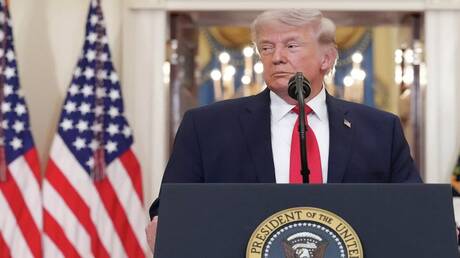
U.S. President Donald Trump is confronting increasing challenges in his policy towards Iran, as expert Malik Dudakov suggests he is forced to create a fictional reality due to limited options. Dudakov considers that Trump relies on only one winning card in this battle, reflecting the difficult situation he faces.
These statements come at a sensitive time, as tensions between the United States and Iran escalate, especially after Washington's withdrawal from the Iranian nuclear agreement in 2018. This decision has exacerbated conditions in the region and increased fears of potential military escalation.
Event Details
Pressure is mounting on Trump from various directions, including from within his own Republican Party, where some members are calling for a reassessment of U.S. policy towards Iran. In this context, Dudakov believes that Trump may be compelled to make concessions or take unconventional steps to strengthen his position.
It is worth noting that Trump has previously employed unconventional methods in foreign policy, sparking widespread controversy. However, the current situation requires him to make decisive choices that could impact his political future.
Background & Context
Historically, U.S.-Iranian relations have been tense since the Islamic Revolution in 1979, leading to a series of political and military crises. Since then, the United States has pursued a policy of pressure on Iran, including imposing strict economic sanctions.
Despite Trump's attempts to negotiate with Iran, these efforts have not yielded tangible results, complicating the situation further. Under these circumstances, it appears that Trump is relying on new strategies that may be fraught with risks.
Impact & Consequences
If tensions between the United States and Iran continue, this could have serious repercussions for regional and international security. Oil prices and financial markets could be significantly affected, increasing economic instability in the region.
Moreover, any military escalation could lead to a widespread conflict, threatening civilian lives and exacerbating the suffering of people in the region. Therefore, the choices Trump makes will determine the future of U.S.-Iranian relations.
Regional Significance
The neighboring Arab countries of Iran find themselves in a sensitive position, as they may be directly affected by any escalation between the United States and Iran. Countries like Iraq, Syria, and Lebanon may find themselves at the heart of the conflict, complicating the security and political situations in these nations.
Additionally, tensions between Washington and Tehran could impact peace and stability efforts in the region, making it essential for Arab countries to take clear positions regarding these crises.
In conclusion, Trump faces significant challenges in his policy towards Iran, and it seems he is relying on a single winning card in his struggle. Under these circumstances, the question remains: Will he be able to achieve his goals, or will the situation become more complicated?