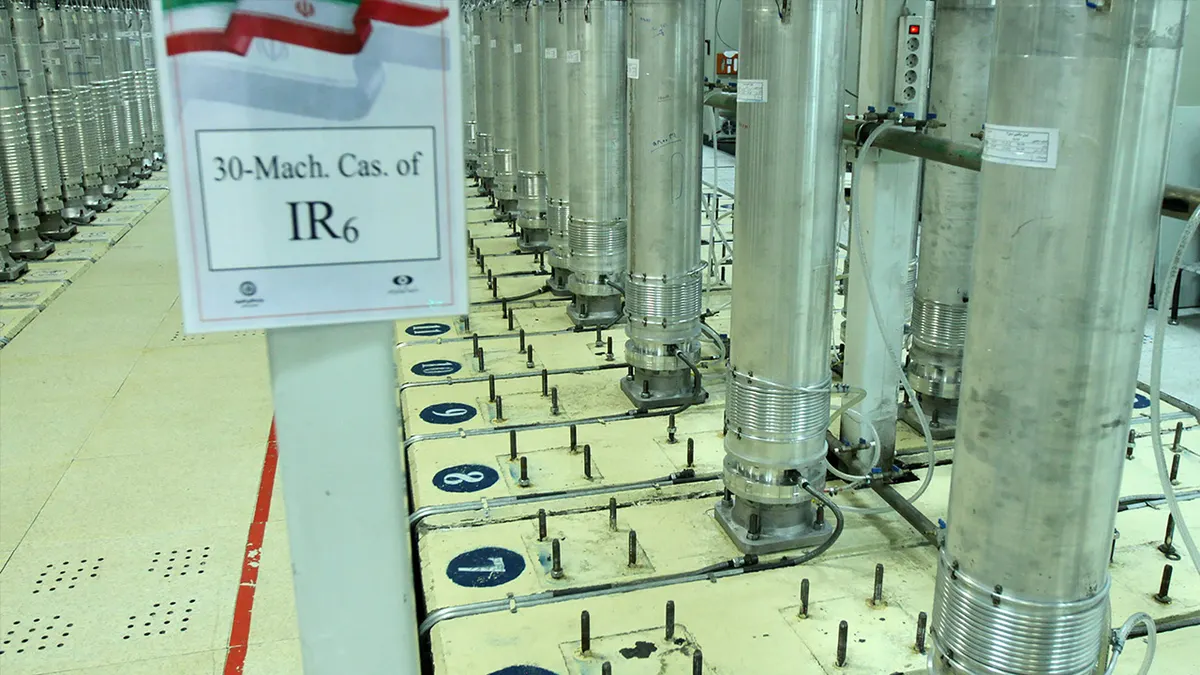
A recent report reveals that former U.S. President Donald Trump sought to stop Iran's nuclear program but left quantities of uranium in the country. This raises questions about the effectiveness of U.S. policies in the Middle East, especially amid ongoing tensions between Washington and Tehran.
This information comes at a sensitive time, as fears grow regarding Iran's ability to develop nuclear weapons. Trump took drastic steps during his presidency, including the withdrawal of the United States from the Iranian nuclear deal in 2018, which aimed to restrict Iran's nuclear program in exchange for easing sanctions.
Details of the Event
Reports indicate that Trump aimed to reduce Iran's capability to develop a nuclear bomb, yet at the same time, he left quantities of uranium in its possession. This raises questions about the impact of U.S. policies on Iran's nuclear program and whether the measures taken were sufficient to achieve the desired goals.
Uranium is a key element in the production of nuclear fuel, and its presence in Iran could enhance its ability to develop a military nuclear program. Some observers have pointed out that leaving quantities of uranium behind could have serious implications for regional and international security.
Background & Context
Historically, relations between the United States and Iran have been tense, especially following the Islamic Revolution in 1979. Since then, the U.S. has pursued a policy of pressure on Iran, including the imposition of economic and military sanctions. However, Trump's withdrawal from the nuclear deal has heightened tensions, as Iran viewed this withdrawal as a breach of international commitments.
In recent years, the region has witnessed an escalation in military activities and tensions between Iran and Western countries, increasing concerns about the possibility of military conflict. As Iran continues to enrich uranium, fears remain regarding its nuclear intentions.
Impact & Consequences
These developments are significant as they could affect regional and international security. If Iran manages to develop nuclear weapons, it could lead to an arms race in the region, with other countries in the Middle East seeking to enhance their military capabilities.
Moreover, the ongoing tensions between the United States and Iran could impact stability in the region, potentially escalating existing conflicts. This situation may also weaken the United States' ability to influence regional policies.
Regional Significance
Developments related to Iran's nuclear program directly affect Arab countries, especially those sharing borders with Iran or suffering from its influences. Countries like Saudi Arabia, the UAE, and Egypt are among those closely monitoring the developments of Iran's nuclear program, fearing it could destabilize the region.
The presence of nuclear weapons in Iran may prompt some Arab countries to reassess their defense strategies, potentially leading to increased military spending and the development of local armament programs. In this context, the need for a comprehensive regional dialogue remains crucial to achieve security and stability in the region.