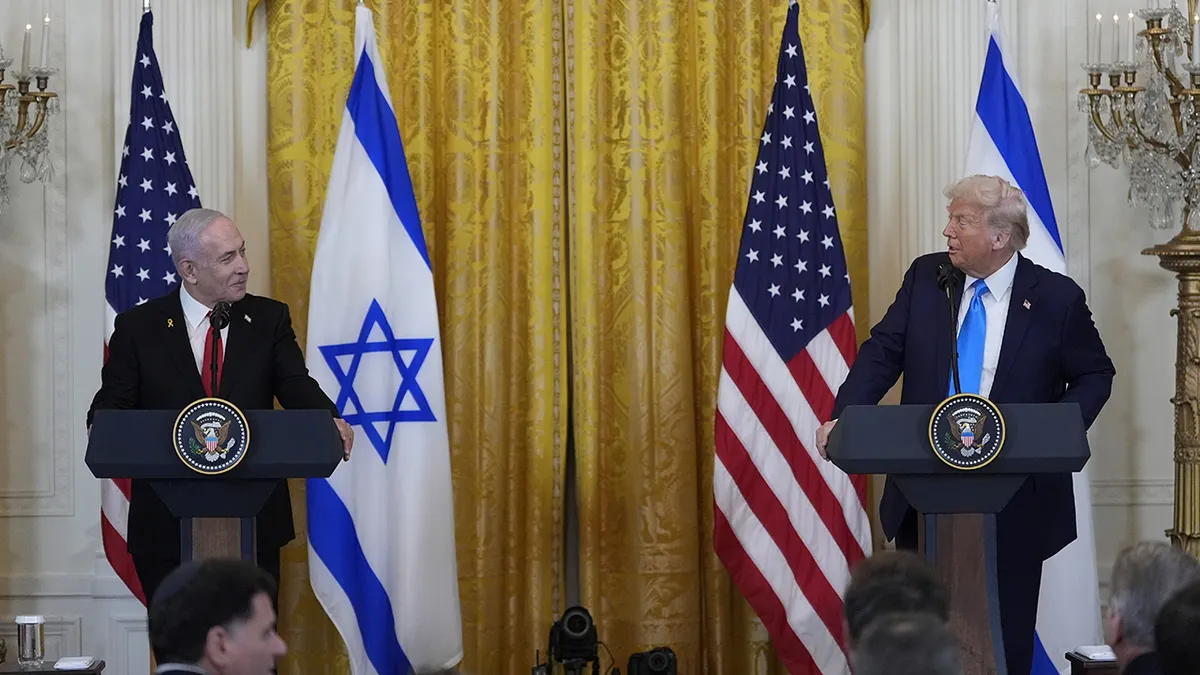
U.S. President Donald Trump has initiated a war against Iran in collaboration with Israel, marking a significant first in their joint efforts against a major regional power. This controversial war follows decades of failed attempts by previous U.S. administrations to engage Iran in conflict.
This war is seen as a real test of U.S. foreign policy in the Middle East, as Trump seeks to achieve strategic objectives related to curbing Iran's influence in the region. It is evident that Israeli Prime Minister Benjamin Netanyahu has played a pivotal role in pushing Trump towards this decision, benefiting from the close relations between the two countries.
Details of the Event
In the initial weeks of the war, the region witnessed a notable escalation in military operations, with U.S. forces targeting strategic sites in Iran, leading to strong reactions from Tehran. Reports have confirmed that these military operations were unexpected, heightening tensions in the area.
The war has also raised widespread concern in international circles, with many countries considering that this escalation could lead to dire consequences for regional and international security. Some nations have expressed fears that this war could ignite a full-scale conflict in the region.
Background & Context
Historically, U.S.-Iran relations have been tense, especially following the Islamic Revolution in 1979. Since then, the United States has attempted to impose economic and political sanctions on Iran, yet Tehran has managed to maintain its influence in the region. In recent years, tensions have significantly increased, particularly after Trump's withdrawal from the Iranian nuclear deal in 2018.
Moreover, Israeli support for Trump in this war is not new, as Tel Aviv has long sought to diminish Iran's influence in the Middle East, viewing it as a direct threat to its security. Israel has leveraged its influence in Washington to push successive U.S. administrations to adopt a more hardline stance towards Iran.
Impact & Consequences
The repercussions of this war extend beyond the region, potentially affecting international relations as a whole. This conflict is expected to increase tensions between the United States and Russia, as Moscow views Tehran as a strategic ally. There are also concerns that this war could escalate conflicts in other areas, such as Iraq and Syria.
Furthermore, this war may exacerbate humanitarian crises in the region, as civilians could suffer more due to military operations. Human rights organizations have warned that any military escalation could worsen humanitarian conditions in Iran and neighboring countries.
Regional Significance
For Arab countries, this war could reshape the balance of power in the region. Some nations may benefit from this conflict, while others may face increased security threats. There are also fears that this war could intensify sectarian conflicts in the region, potentially deepening divisions among Arab states.
In conclusion, the ramifications of the war on Iran remain unclear, but it is certain that it will leave a profound impact on the region and the world. As escalation continues, there is hope that the international community can find peaceful solutions to avoid further conflicts.