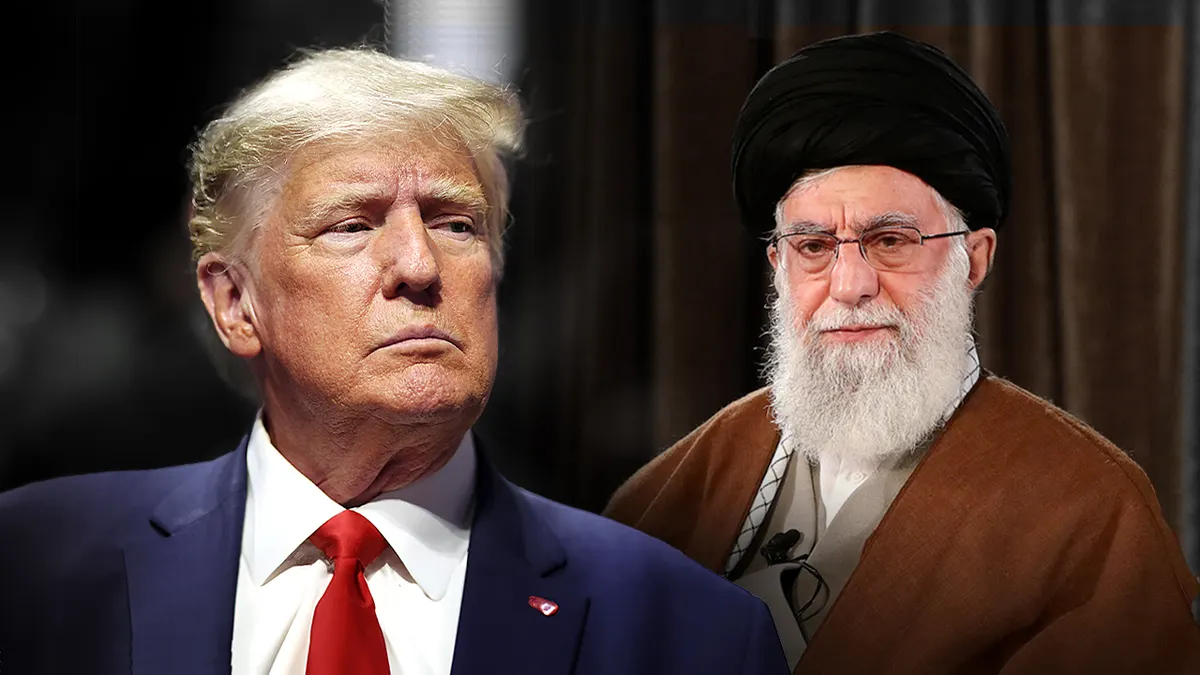
Former President Donald Trump revealed that Iran is facing increasing pressures due to the overwhelming strikes it is enduring, indicating that Tehran is striving hard to reach an agreement to end the fighting. These statements come amid rising tensions in the Middle East, where fears of potential military escalation are growing.
In his remarks, Trump emphasized that the military and economic pressures on Iran have significantly impacted its ability to continue in the conflict. He noted that these pressures might drive Tehran to seek diplomatic solutions to end the ongoing dispute.
Details of the Situation
Trump's statements coincide with an escalation of military operations in the region, where Iran is facing multiple strikes from American forces and their allies. Reports have shown that these strikes target strategic sites belonging to the Iranian Revolutionary Guard, increasing tensions between Tehran and Washington.
This comes at a time when relations between Iran and the United States are severely strained, especially after Trump withdrew from the nuclear agreement in 2018. Since then, the United States has imposed strict economic sanctions on Iran, significantly affecting its economy.
Background & Context
Historically, relations between Iran and the United States have been tense since the Islamic Revolution in 1979. These relations have witnessed several phases of escalation and de-escalation, but the current situation is considered one of the most complex periods. After Trump's withdrawal from the nuclear agreement, Iran has escalated its nuclear activities, raising international concerns about its nuclear program.
Iran is currently seeking to strengthen its position in negotiations, hoping to alleviate the sanctions imposed on it. In this context, Trump's statements serve as an indication that international pressures may lead to changes in Iran's policy.
Impact & Consequences
If Iran manages to reach an agreement to end the fighting, it could lead to a de-escalation of tensions in the region. However, continued military pressures may escalate the conflict, potentially adversely affecting regional stability.
These developments are significant not only for Iran and the United States but also for many countries in the region that are directly or indirectly affected by the conflict. Any agreement could contribute to improving relations between Iran and Western countries, potentially opening new avenues for regional cooperation.
Regional Significance
Arab countries are significantly affected by the tensions between Iran and the United States. The conflicts in Iraq, Syria, Lebanon, and Yemen bear the fingerprints of Iranian intervention, making any changes in Tehran's policy impact security and stability in the region.
If Iran succeeds in reaching an agreement to end the fighting, it could lead to improved security conditions in some Arab countries. However, some parties may seek to exploit the situation for political gains.
In conclusion, developments in Iranian-American relations remain a focal point for the world, as fears of conflict escalation rise, while hopes for peace persist amid potential diplomatic efforts.