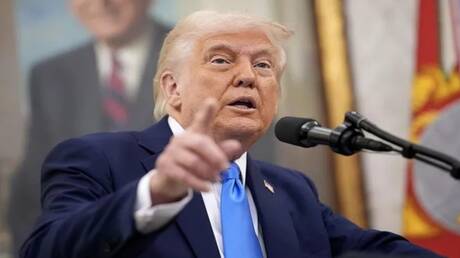
U.S. President Donald Trump recently stated that the American administration sent weapons to a group of individuals inside Iran as part of its efforts to overthrow the Iranian regime. Trump confirmed that the recipients of these weapons did not use them as expected, but rather kept them for themselves.
These remarks come at a time when U.S.-Iran relations are experiencing increasing tension, as Trump seeks to bolster his position against Tehran. This action is considered part of a broader strategy aimed at supporting the Iranian opposition, which faces severe repression from the ruling regime.
Details of the Incident
In his remarks, Trump clarified that the weapons sent were intended to empower Iranians to resist the existing regime. However, the failure of the recipients to utilize these weapons raises questions about the effectiveness of this strategy. Trump indicated that the Kurds were the ones who received these weapons, adding a new dimension to the conflict in the region.
These statements are part of Trump's policy aimed at undermining Iranian influence in the Middle East, where the Iranian regime faces multiple internal and external challenges. This situation reflects the complexities of the conflict in the region, where the interests of various countries and actors intersect.
Background & Context
Historically, the United States has pursued policies of supporting opposition movements in various countries, including Iran. In recent years, Iran has witnessed widespread popular protests against the regime, prompting many external powers to consider how to support these movements. However, the challenges faced by these movements make it difficult to achieve tangible results.
These statements coincide with rising tensions between the U.S. and Iran, especially following Washington's withdrawal from the nuclear agreement in 2018. This withdrawal has exacerbated economic and political crises in Iran, intensifying popular protests.
Impact & Consequences
Trump's statements could lead to heightened tensions in the region, as Iran may perceive this action as a direct threat to its security. Additionally, the retention of weapons by the Kurds may raise concerns among neighboring countries, particularly Turkey, which views the Kurds as a threat to its national security.
Moreover, these developments could affect U.S. relations with its allies in the region, as they may need to reassess their strategies in dealing with Iran and the Kurds. Furthermore, these statements could strengthen the position of hardliners within Iran, complicating the situation further.
Regional Significance
These events are of significant importance to the Arab region, as any escalation in the U.S.-Iran conflict could impact the stability of the Gulf Arab states. Additionally, support for the Kurds may raise concerns among Arab countries about the potential increase of their influence in the region.
In conclusion, developments in Iran and the Middle East in general remain under scrutiny, as the world watches with concern how these events unfold and their impact on security and stability in the region.