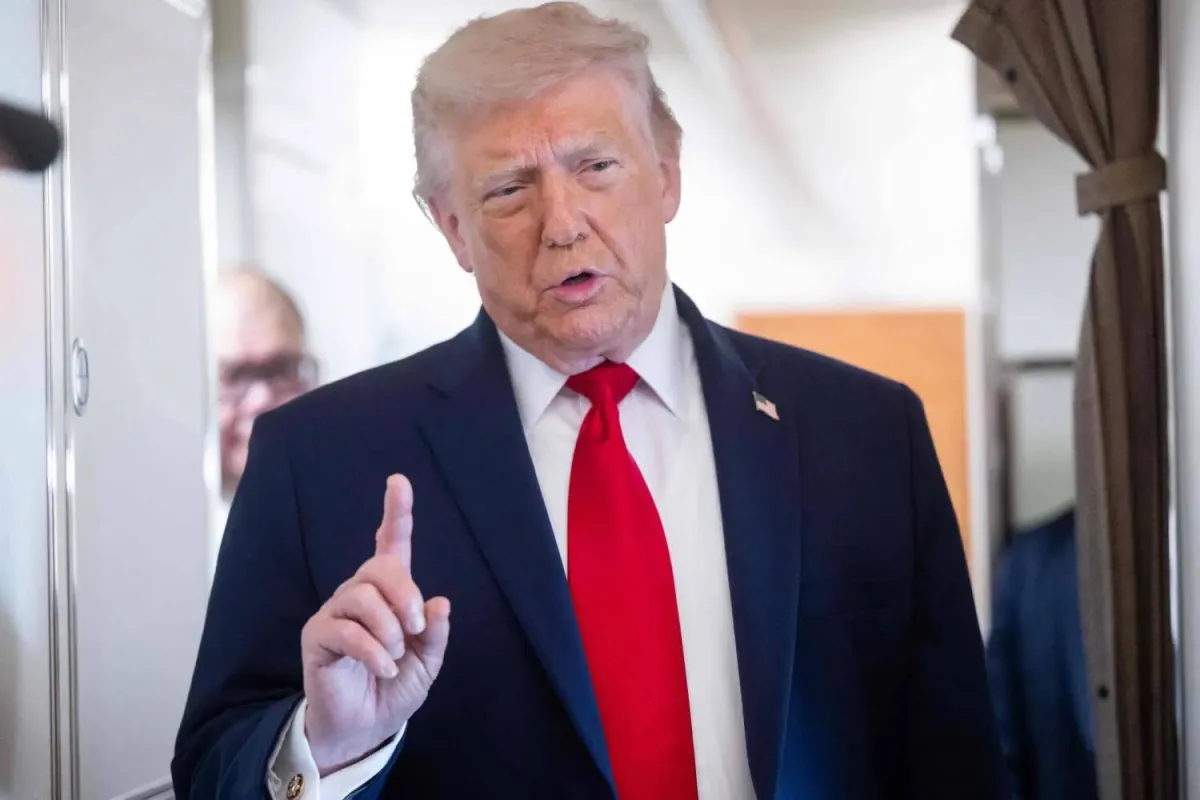
U.S. President Donald Trump angrily walked out of an interview with NBC after a heated exchange over allegations of election fraud. During the pre-recorded interview, which aired on Sunday as part of the "Meet the Press" program, Trump also criticized the integrity of the press, including the show he was appearing on.
In the course of the discussion, Trump reiterated his accusations against former President Joe Biden's administration for imprisoning people "who did nothing wrong," but Welker interjected, asserting that there was no evidence to support those claims. Nevertheless, Trump maintained his stance, stating: "There is a lot of evidence, there is compelling evidence. There is nothing but evidence," to which Welker replied, "Well, this evidence has not been presented in a court of law."
Details of the Incident
As the debate intensified, Trump returned to questioning the results of the 2020 election, claiming that instances of election fraud were still occurring in California. The U.S. President stated that Republicans are "quickly retreating because the election was rigged." When Welker asked about the evidence he had to support his claims of "fraud" in the California elections, Trump responded: "They are as corrupt as you are, your media is corrupt. The 'Meet the Press' program is corrupt too."
He added: "You are serving their interests with these matters, you know these elections are rigged, and your network knows that. Your network is biased and corrupt. Sorry. Let's end this discussion, I'm done."
Welker attempted to persuade him to continue the interview, noting that her team had traveled to Wisconsin specifically for it, but Trump refused, considering that "unfair journalism" harms the country. After the interview aired, Welker confirmed that she had spoken with Trump on Saturday, and he agreed to return for a future interview, without disclosing when or where it would take place.
Background & Context
This incident comes at a sensitive time for Trump, who faces multiple political and legal challenges. Since losing the election in 2020, Trump has continued to promote claims of election fraud, sparking widespread controversy in the American political arena. These allegations have led to a significant divide between his supporters and opponents, impacting the Republican Party's image in upcoming elections.
The tensions between Trump and the media are not new, as the U.S. President has long criticized the press, labeling it as unfair, reflecting a decline in trust in media institutions in the United States. This dynamic raises questions about the role of media in American democracy and how it can influence public opinion.
Impact & Consequences
Trump's withdrawal from the interview may reflect his strategy in facing criticism, as he seeks to bolster his base by portraying himself as a victim of the press. This behavior could deepen political divisions in the United States and enhance polarization between Republicans and Democrats.
Additionally, this incident may affect the upcoming midterm elections, as Republicans aim to regain control of Congress. If Trump continues to promote allegations of election fraud, it could impact voter turnout, especially among his supporters who feel their votes have been stolen.
Regional Significance
Political events in the United States are closely monitored by many Arab countries, as the U.S. is considered a key player in global politics. Any changes in U.S. policy could affect relations with Arab nations, especially amid existing tensions in the region.
Moreover, the ongoing debate over the integrity of U.S. elections may influence the perception of democracy in the Arab world, where many countries seek to strengthen their political systems. These dynamics could lead to increased pressure on Arab governments to adopt political reforms that enhance transparency and public participation.
In conclusion, political events in the United States remain of significant interest, reflecting the challenges facing democracy and how they may impact global politics.